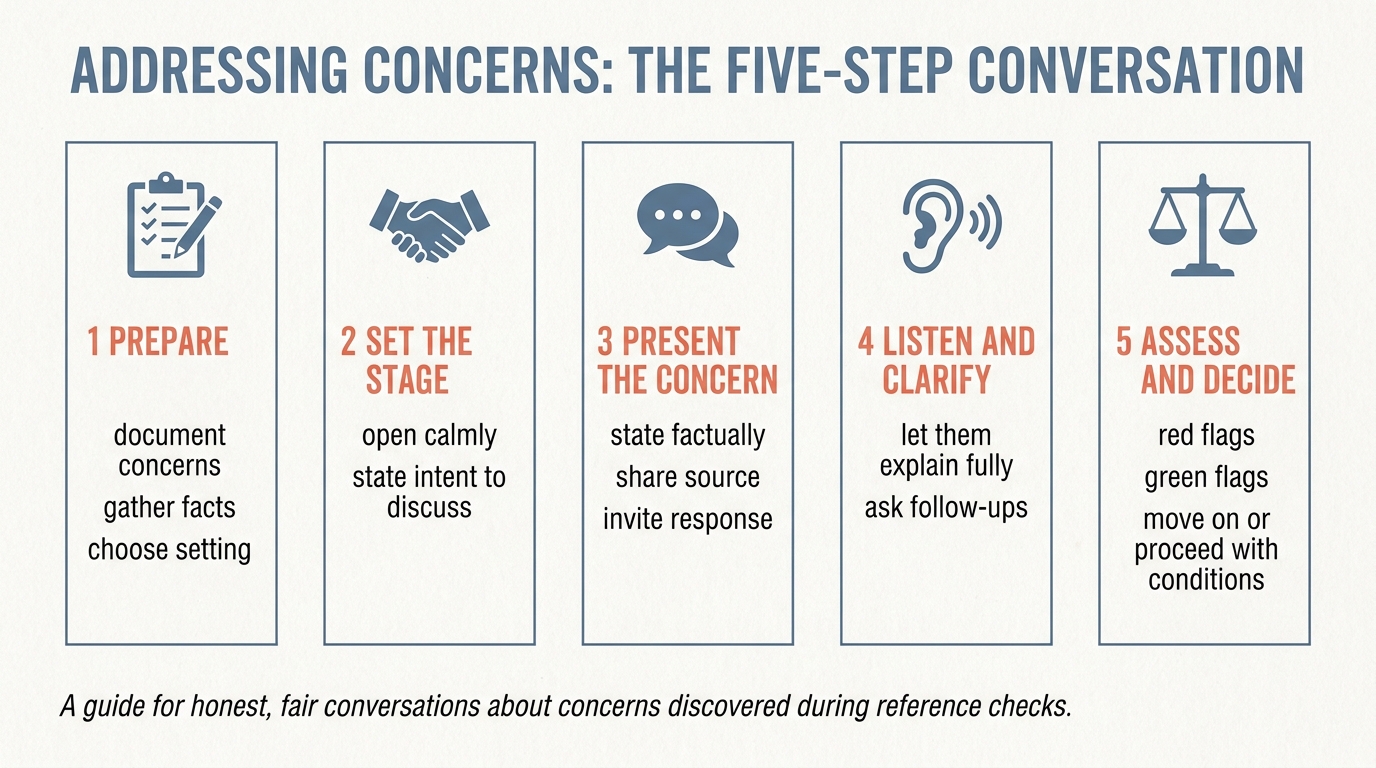
Addressing Concerns Guide
DOCX download
Addressing Concerns Guide
Free editable Word guide you can copy, fill in, and share with your band. Also readable on this page.
How to use this guide
Guide for addressing concerns discovered during reference checks. Condense the worry into one checkable sentence, script your questions, and map every outcome before anyone sits down to talk.
Suggested workflow: write the concern and its impact the same day it surfaces, draft questions that test facts rather than feelings, then revisit the page after the conversation to record what actually happened.
When a reference or early rehearsal raises a specific worry, you need a fair conversation—not ghosting and not an ambush. Clarity protects everyone.
What is worth raising
Raise anything that would change the hire if it turned out to be true: chronic lateness at a previous gig, money drama with a former singer, substance issues that affect shows, or a skill claimed in the ad that does not actually exist. A vague bad vibe deserves a private talk between the leaders first, not a candidate ambush.
Before you speak, compress the worry into one plain sentence you could read aloud without editorializing, something like two references said you quit a tour without warning. Framing it that narrowly keeps the conversation about a checkable fact instead of sliding into a verdict on somebody's character.
How to raise a concern fairly
Lay out the observation, name the source if that is appropriate, and explain what it would mean for the gigging calendar or the money split. Then ask for their side and genuinely listen, because the goal is a sound yes-or-no decision, not winning an interrogation you rehearsed in the car.
When the explanation holds up, record the resolution and any trust conditions in writing, such as a ninety-day trial with a review date pinned where everyone can see it. Without that record the same worry resurfaces as rumor two months later, and the entire discussion gets re-run from zero.
When walking is the adult move
Some worries are coachable and some are deal-breakers, and the difference is whether the role can still function without the trust that got broken. A drummer who exaggerated past experience is fixable; a singer whose former bandmates independently describe missing deposits is not, so exit cleanly.
A clean no delivered within days is kinder than a long maybe that quietly blocks the seat for better fits. Tell the candidate the process has ended, thank them for their time, and let the rest of your shortlist move forward while those players still have other options.
Fill-in: Concern conversation plan
Concern in one sentence: ________
Impact on band: ________
Questions to ask: ________
Possible outcomes: ________
Putting it into practice
If a live concern exists, schedule the conversation within 72 hours—delay is its own decision.
FAQ
What kinds of concerns should we raise with a candidate?
Anything that would change the hire if true: reliability, money drama, substance issues affecting shows, skill gaps claimed as strengths, or conflicts with existing members. Vague “vibes” still deserve a private leadership chat first, then a fair conversation if you proceed.
How do we raise a concern without becoming the police?
State the specific observation, the source if appropriate, and the impact on the band. Ask for their side. Decide based on clarity and fit—not on winning an interrogation.
What if the candidate’s explanation is good enough?
Document the resolution and the conditions of trust (trial period, check-ins). Moving forward without that record often reopens the same fight later.
When should we walk away instead of discussing further?
When safety, honesty, or core logistics are broken and the role requires trust you no longer have. Not every concern is coachable; some are deal-breakers.