Progress Tracking System
DOCX download
Progress Tracking System
Free editable Word guide you can copy, fill in, and share with your band. Also readable on this page.
How to use this guide
System for tracking band progress. Finish with two named metrics and a standing review date the band can actually keep.
Once metric one, metric two, and the review day are chosen, pin the sheet where the band plans each week and retire any metric that stops changing decisions.
Goals without tracking are wishes. Track leading indicators weekly so you can steer before the quarter ends in surprise failure.
What to track
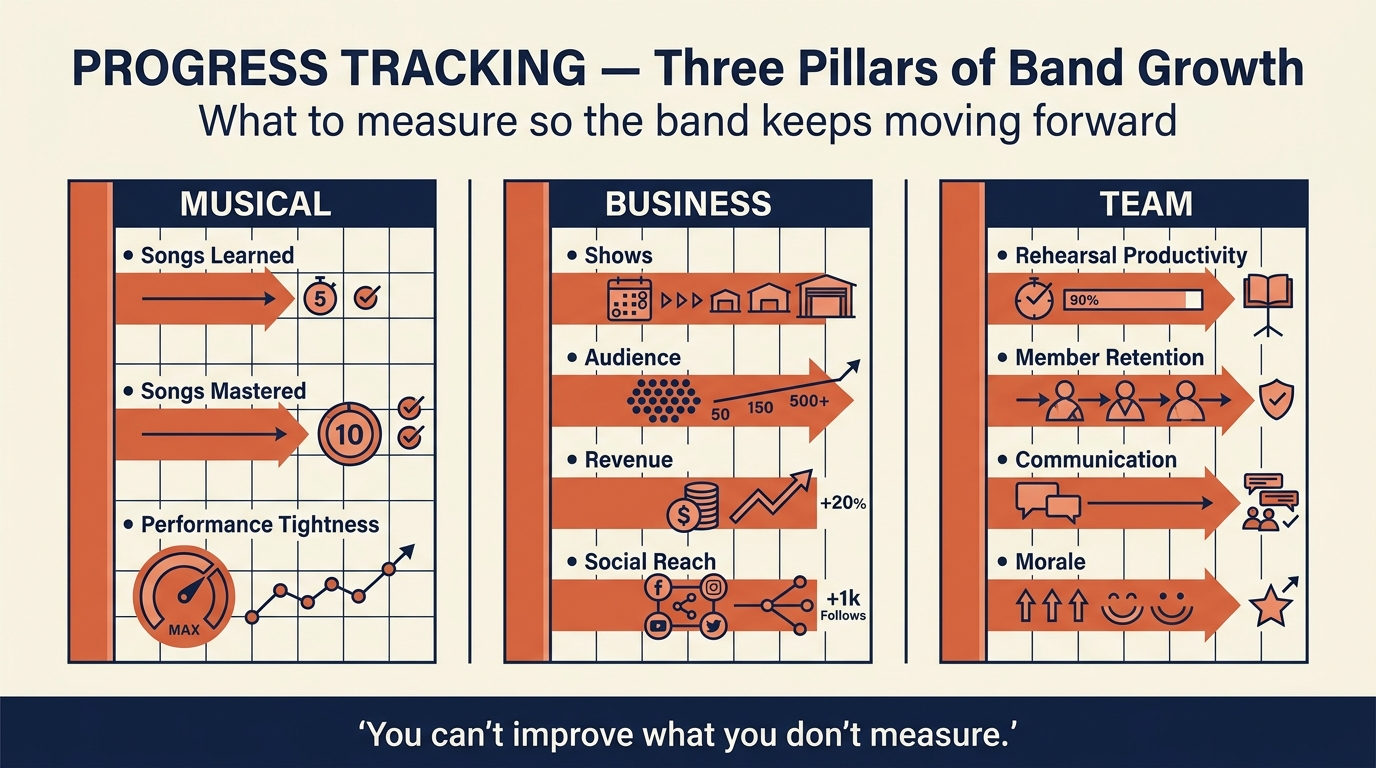
The numbers worth watching are leading indicators you control: songs moved from rough to show-ready, pitches sent to venues, minutes spent drilling weak skills, and content actually shipped. Follower counts and playlist adds arrive months late and mostly measure luck, so they make terrible steering wheels for a working band.
Pick two measures the band will genuinely open every Monday, because five ignored columns are worse than two honest ones. Any number that has not changed a single decision after eight weeks gets dropped without ceremony, since measuring theater is still just theater.
Visibility and tools
A shared sheet visible to all five members creates gentle accountability; a leaderboard posted to the band's public channel creates shame. Aim for the first: everyone can see who owns what this week, and nobody's rehearsal minutes get broadcast to ex-bandmates and local rivals scrolling past.
A plain spreadsheet or a free board the drummer already opens beats a forty-dollar app abandoned by week three. Whatever tool survives contact with a busy gig month wins, so choose the simplest option that loads fast on a cracked phone screen in a venue parking lot.
Review monthly
Numbers without a review ritual are spreadsheet cosplay, so put a recurring thirty-minute slot on the calendar at the end of each month. Look at the two measures together and decide one adjustment: keep the goal, kill it, or change the target before the next cycle starts.
A goal that produced three songs in January and zero by March needs a conversation, not another month of hopeful logging. Ending the review with a single concrete change, like cutting weekly content from four posts to two, keeps the ritual small enough that people keep showing up.
Fill-in: Weekly trackers
Metric 1: ________
Metric 2: ________
Review day: ________
Putting it into practice
Pick two leading metrics and review them for four weeks.
FAQ
What should we track weekly?
Leading indicators: songs finished sections, pitches sent, practice minutes on weak skills, content shipped. Lagging vanity metrics alone mislead.
How visible should trackers be?
Shared enough that owners feel accountable; not so public they become shame boards.
What tools work?
Simple sheets or task boards beat complex apps you abandon. Consistency beats software brand.
How do we review progress?
Monthly: keep, kill, or change goals. Tracking without review is spreadsheet cosplay.