Goal Setting Template
DOCX download
Goal Setting Template
Free editable Word guide you can copy, fill in, and share with your band. Also readable on this page.
How to use this guide
Template for setting and tracking band goals. Draft the quarter's aims together and end the session holding one primary goal with metrics and named owners.
Suggested workflow: set goals at the quarter's kickoff, check the metrics at mid-quarter, and rewrite the page whenever the band's ambitions shift.
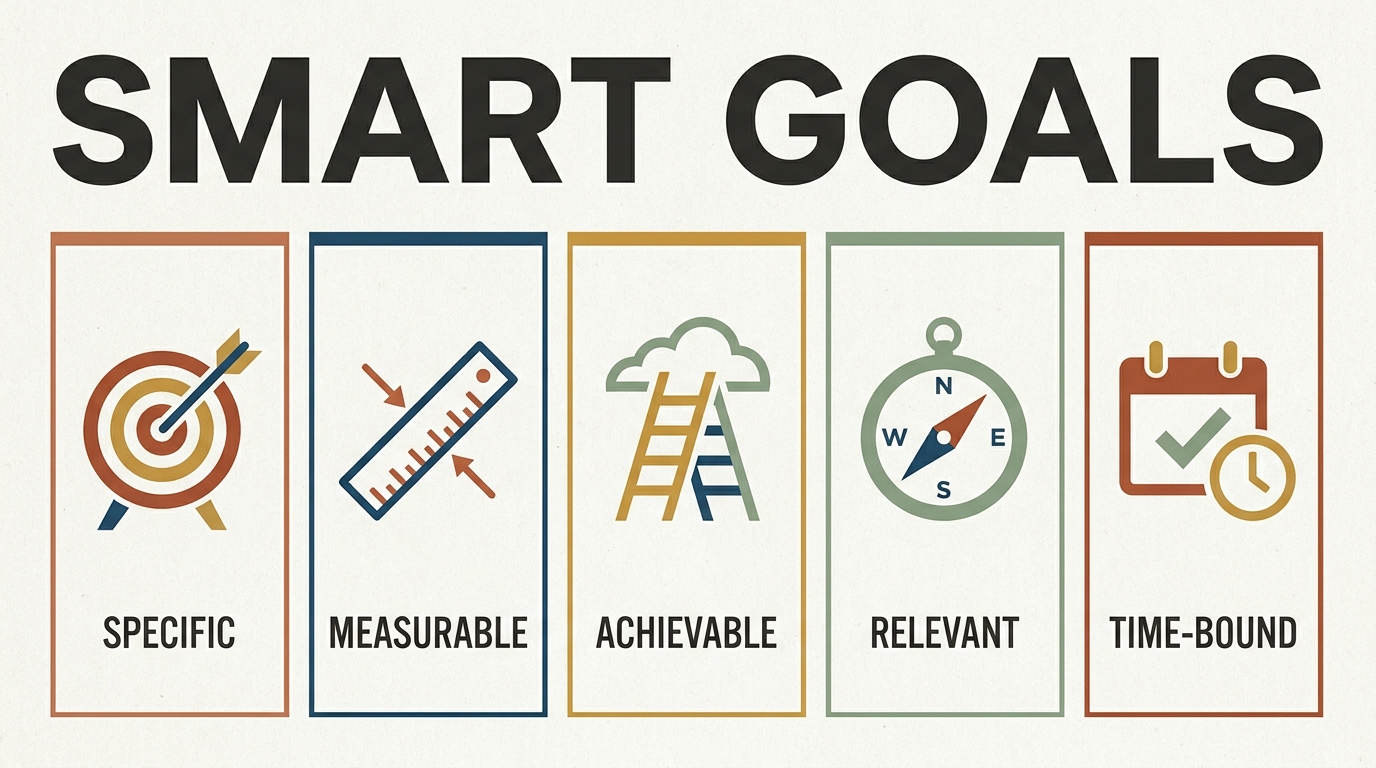
“Blow up” is not a goal. Usable goals have outcomes, time boxes, owners, and leading metrics so the band can tell whether the quarter moved.
Few priorities
One primary aim plus at most two supporting ones is all a working band can genuinely move in a quarter. Five “priorities” means none, so write the outcome in language a stranger could test — “record and release a four-song EP by June 30,” not “level up our sound.”
Attach one owner and one date to every line, or the calendar fills with noise while the set stays unfinished. The singer who owns “book three support slots” needs real authority to email venues directly without asking permission in the group chat each time it comes up.
Personal versus band goals
Individual ambitions should feed the shared calendar rather than secretly compete with it. A guitarist shedding weak chord voicings for the spring shows helps everyone; a guitarist quietly launching a side band that books the same Fridays is a conflict arriving on a delay that detonates mid-season.
Make dependencies explicit so personal targets ladder up to the collective one. If the quarter's aim is an EP release, then the drummer's goal of tracking final takes by March 15 and the bassist's goal of finishing artwork by April 1 are support beams, not separate projects.
Misses without blame theater
When the band misses, the honest options are shrinking the scope, building the missing skill, or admitting the capacity estimate was fantasy. A twenty-minute retrospective that ends with exactly one change — booking the studio before writing is finished next time — beats an evening of complaints.
Blame theater freezes learning because everyone leaves the room defending themselves instead of fixing the process. Ask what the miss teaches about estimation or workload, write the answer next to the goal, and treat next quarter's page as evidence of whether the lesson stuck.
Fill-in: Quarter goals
Primary: ________
Supporting: ________
Metrics: ________
Owners: ________
Putting it into practice
Set one primary quarter goal with a metric this week.
FAQ
What makes a band goal usable?
Specific outcome, time box, owner, and a leading metric (pitches sent, songs finished)—not only vanity outcomes.
How many goals per quarter?
One primary and up to two supporting. Five “priorities” means none.
How do individual goals fit?
Personal practice goals support band goals; they should not secretly compete with shared calendar commitments.
What if we miss goals?
Retrospective without blame theater: adjust scope, skills, or honesty about capacity.