Audition Observation Checklist
DOCX download
Audition Observation Checklist
Free editable Word guide you can copy, fill in, and share with your band. Also readable on this page.
How to use this guide
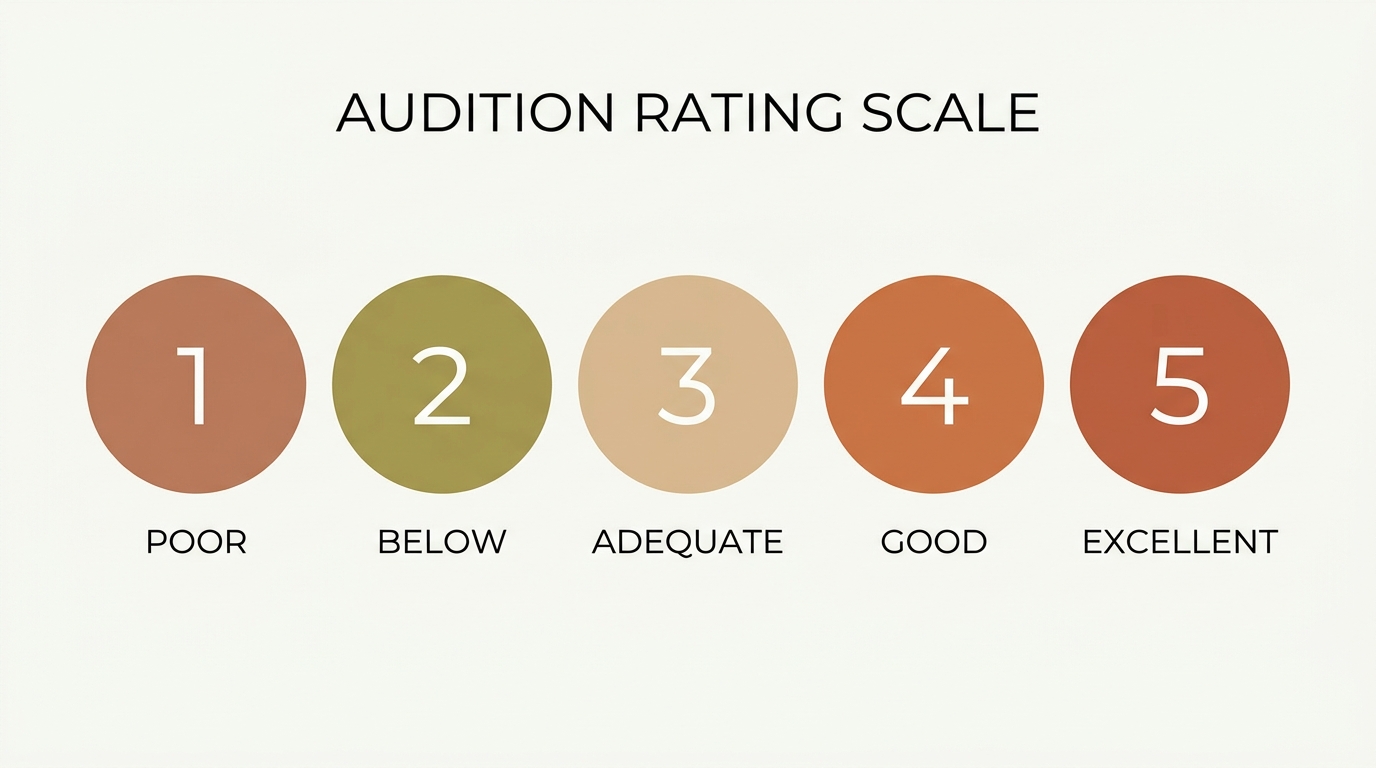
Checklist for observing auditions. A completed sheet per candidate turns the evening into comparable scores on prep, feel, and listening instead of hazy impressions.
Print a fresh page for every candidate, complete it the same day while impressions are sharp, keep scored sheets with the search's other notes, and pull them back out when the next seat opens.
Shared observation beats parking-lot politics. A checklist turns “I liked them” into comparable notes about time, listening, prep, and presence.
Who fills the checklist
Two scorers beat one whenever possible: a musical lead watching time feel and blend, plus an ops-minded observer watching punctuality, attitude, and how the person treats the room. Single-scorer bias is real, and it gets worse when the only judge is also the member most desperate to fill the seat.
When only one person can score, compensate with volume: write full sentences during the session, then debrief the band from that written page rather than from memory and vibes. Paper forces specifics like 'rushed the bridge both takes' instead of a shrug and 'seemed cool,' and impressions stop blurring by Sunday.
What to watch in the room
Score preparation first — charts learned, gear working, arrival ten minutes early — then time feel, dynamics, eye contact, recovery from a flubbed bar, and how gracefully feedback lands when you ask for the bridge softer. The recovery moment predicts tour behavior better than the cleanest sight-read ever will.
Rate every hopeful on identical dimensions so comparison stays honest across a long evening of four guitarists, and finish each page before the next amp powers up. Memory edits aggressively; notes taken three days later describe the person you needed, not the one who played.
Fairness to candidates
Share the judging criteria ahead of time so nobody walks into a trap, but keep live scores private until the band has deliberated. Surprise hurdles mid-audition — 'actually, can you also transpose this to B-flat' — feel like gotchas and travel through the scene as gossip.
Close the loop with everyone who showed up: a genuine thank-you, the decision by the date you promised, and one concrete reason when the answer is no. A bassist who hears back on Friday tells friends the band runs straight, even while disappointed.
Fill-in: Observation notes
Candidate: ________
Prep: ________
Time/feel: ________
Listening: ________
Communication: ________
Hire signal: ________
Putting it into practice
Print or open one checklist per candidate and debrief from paper, not parking-lot volume.
FAQ
Who fills the checklist?
At least two people when possible—musical lead and ops/relationship observer. Single-scorer bias is real.
Should candidates see the checklist?
Not usually mid-audition. You can share a summary of criteria in advance so expectations are fair.
What if someone scores high musically and low on prep?
Decide whether the role can absorb coaching. Prep issues often worsen on tour, not improve.
How soon after the audition should we complete it?
Same day while memory is fresh. Waiting a week invents revisionist history.