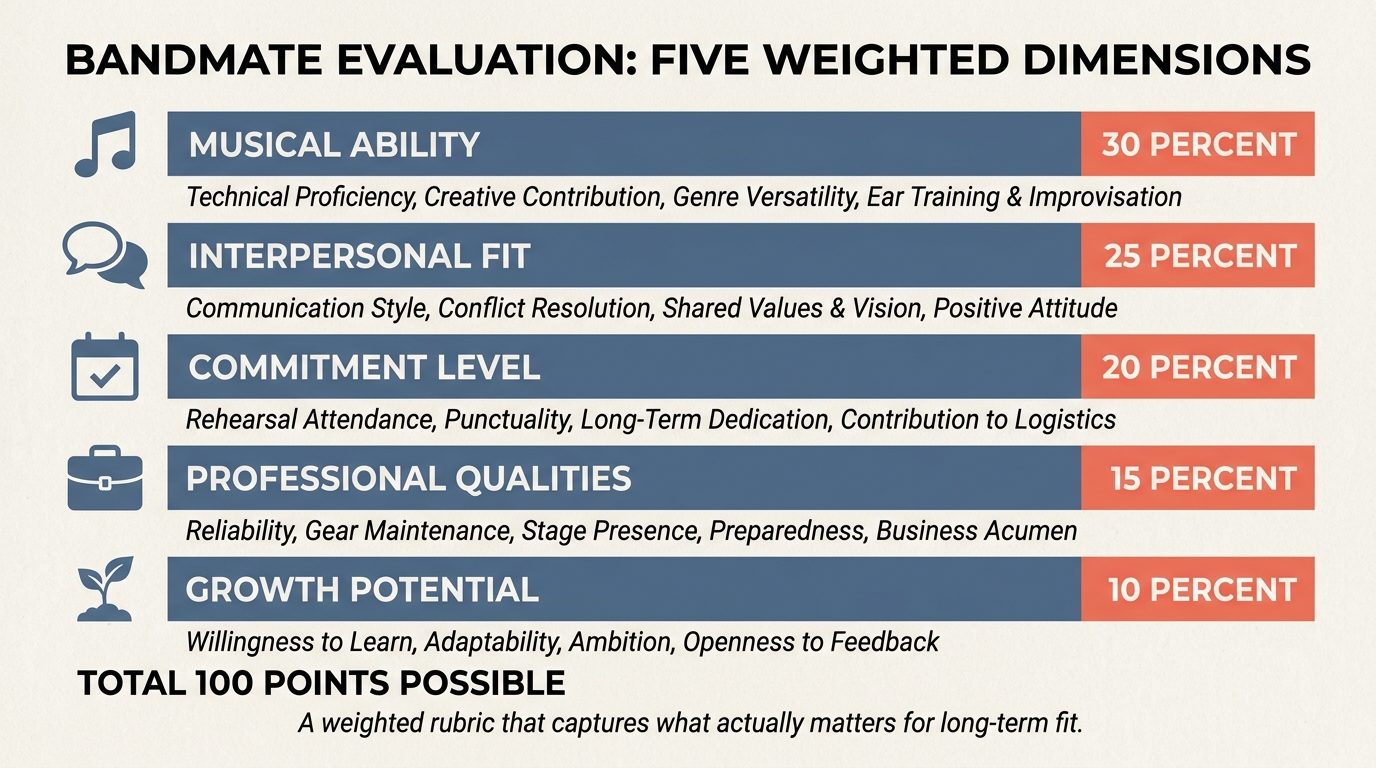
Bandmate Evaluation Framework
DOCX download
Bandmate Evaluation Framework
Free editable Word guide you can copy, fill in, and share with your band. Also readable on this page.
How to use this guide
Framework for evaluating potential bandmates. Score musical fit, reliability, and chemistry for each candidate, then land on a written decision and the feedback a no will receive.
Using the rubric: each scorer fills in their sheet independently right after the audition, totals get compared before any debate, and the framework is reused for every future search.
After auditions or trials, “they’re fine?” is not a decision. A shared evaluation framework prevents lobby wars and forced hires into factions.
Score beyond chops
Grade communication, preparation, stage presence, dependability, and chemistry with the current lineup alongside raw technique, because brilliant playing without logistics still sinks gigs and friendships. Fill in the rubric the same evening while the room is fresh; scores written three days later describe a person who never auditioned.
When someone grades as a ten on playing and a two on showing up, say that tradeoff out loud before emotion writes a prettier story. A mismatch named clearly can be managed with explicit expectations; a mismatch left vague becomes the drummer you resent by the third cancelled practice.
Weight by domain
The person who runs your musical direction should carry the most sway on playing questions, and whoever handles operations should carry it on scheduling and dependability. Equal votes on unequal information is not democracy; it is politics wearing a convincing fair-process costume. Domain weighting fixes that.
Settle the weighting before anyone scores a single person, never after the totals reveal who won. Changing the rubric mid-count to rescue a favorite is how groups lose trust in the whole process and end up deciding by whoever argues longest and loudest at midnight.
Trials need ends
Four to eight weeks of real rehearsals and actual shows reveals nearly everything a trial can reveal, including how the person behaves when the van breaks down. Open-ended trials are unpaid limbo, so define the criteria on day one and put the review on a visible calendar.
A core group that stays deeply split after a fair trial should keep looking instead of forcing the hire. Players installed over sustained objection become permanent factions, and those factions surface a year later as mysterious creative differences that were never really about the music.
Fill-in: Evaluation summary
Candidate: ________
Musical fit: ________
Ops/reliability: ________
Chemistry: ________
Decision: ________
If no, feedback to send: ________
Putting it into practice
Score every active candidate this week and decide in writing with a date.
If the shortlist runs thin, score fresh profiles from the directory against the same rubric rather than lowering the bar for whoever applied.
FAQ
What should we score beyond chops?
Communication, prep, stage presence, reliability, and fit with the existing chemistry. Technical ability without logistics still sinks gigs.
Should every member’s score weigh equally?
Weight by domain: music leads can own musical fit; the person running ops can own reliability. Equal votes on unequal information create politics.
How long should a trial period last?
Enough shows or rehearsals to see stress behavior—often four to eight weeks. Infinite trials are unpaid limbo.
What if scores split the band?
Do not force a hire into a faction. Keep looking or redefine the role. Split hires rarely heal themselves.