Leadership Feedback Template
DOCX download
Leadership Feedback Template
Free editable Word guide you can copy, fill in, and share with your band. Also readable on this page.
How to use this guide
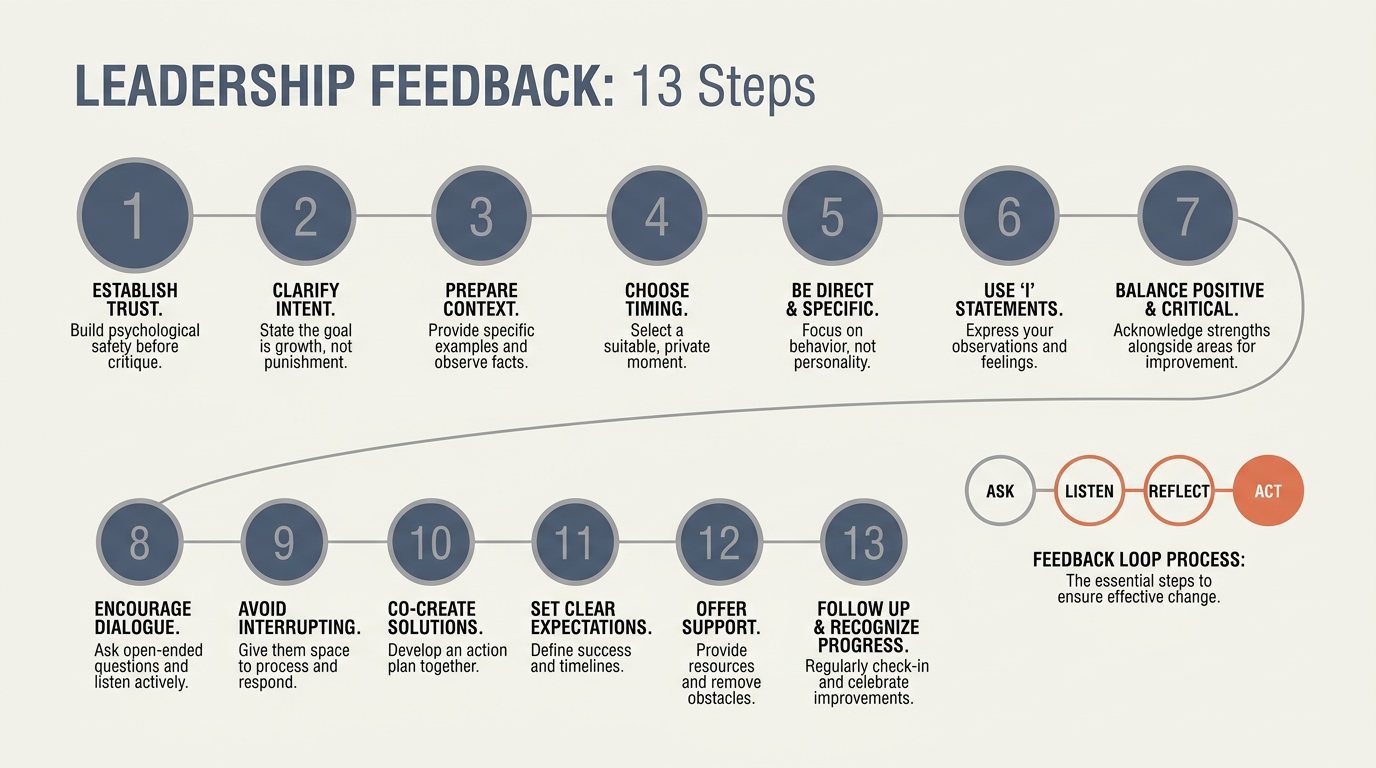
Template for gathering feedback on leadership. Complete one round together and end with written start, stop, and continue answers the leader accepts without debate.
Suggested rhythm: collect start, stop, and continue notes monthly, fold them into a short private conversation, and repeat the round sooner after any public blowup.
Feedback only after explosions trains fear. Scheduled feedback trains growth and keeps truth from becoming mutiny fuel.
How members give feedback safely
Raise concerns privately, close to the event, aimed at impact rather than character. A quiet word after Thursday's rehearsal about the dismissed setlist idea lands; a public pile-on in the van teaches the room that honesty requires a mob and produces a defensive leader.
Frame the message as “when X happened, the impact was Y, and I need Z going forward.” That shape gives the receiver something to act on, where a character essay about being controlling or checked out just invites a counterattack on who is really the problem.
How leaders solicit feedback
Ask three small questions — what should I start doing, stop doing, and continue — and then take the answers without arguing in the moment. Defending yourself mid-sentence guarantees the next round arrives pre-softened to the point of uselessness, which wastes everyone's courage and time.
Weigh the answers by pattern rather than volume. One outlier complaint still deserves genuine curiosity, but five members independently naming the same soundcheck blowups is a signal no amount of extra context explains away, and it belongs at the very top of the work list.
Written plus spoken
Collect short written notes first, because memory edits the night by morning, then have the conversation anyway since tone and sincerity do not survive in bullet points. Store the recurring themes in one shared place, not verbatim transcripts that read like surveillance or evidence gathering.
Close every round with one visible change when the criticism is valid, or a plain explanation of why nothing will move. Members who watch their honesty produce a different load-out routine keep contributing; members who watch it vanish stop bothering by the third round.
Fill-in: Feedback round
To leader: ________
Start: ________
Stop: ________
Continue: ________
Putting it into practice
Run one structured feedback round this month.
FAQ
How do members give leaders feedback safely?
Private, specific, timed, and about impact. Public pile-ons create defensive leaders.
How should leaders solicit feedback?
Ask one question at a time (“What should I start/stop/continue?”) and do not argue in the moment.
What if feedback conflicts?
Look for patterns across people and situations. One outlier still deserves curiosity, not automatic obedience.
Should feedback be written?
Short written notes help memory; the conversation still matters for tone.