How to Create an EPK (Electronic Press Kit) for Your Band in 2025
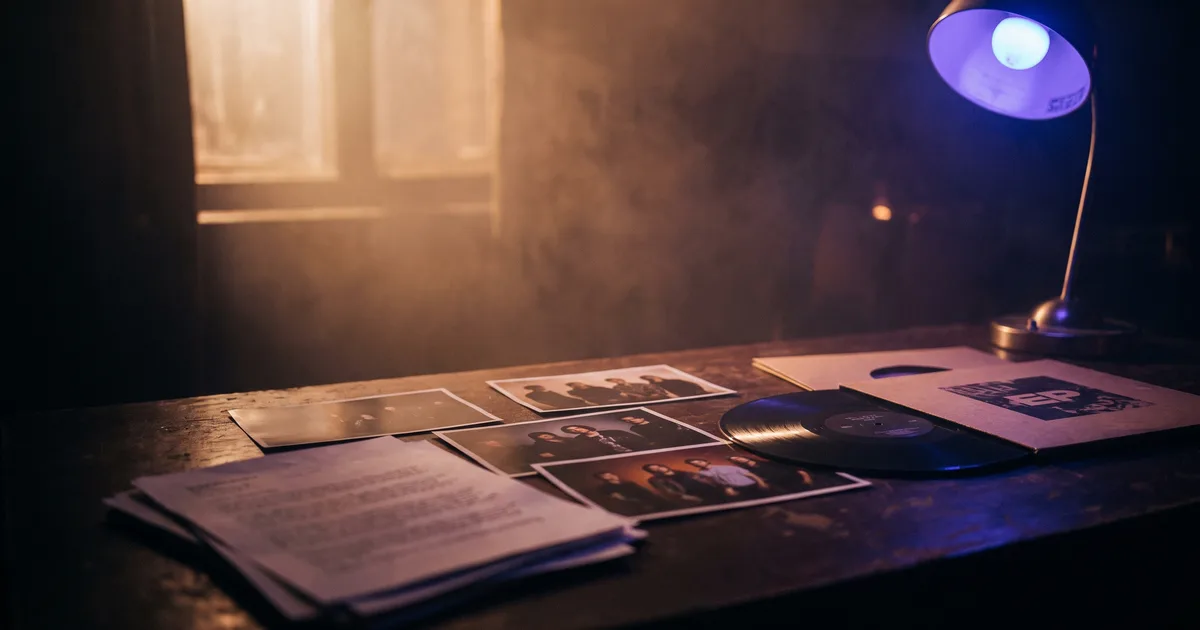
Your EPK is often the reason a venue replies—or never opens your email again. Busy talent buyers compare acts in seconds on a phone between other jobs. They are not browsing for fun. They are answering one question: is this band a fit for my room, my night, and my risk tolerance?
An electronic press kit is a decision tool. It is not a scrapbook of every demo you loved in 2019, and it is not a substitute for a good live show. Build it so a stranger can understand you fast, trust the links, and know how to say yes.
What an EPK is actually for
Different people open your kit with different jobs:
- Venue buyers / bookers — sound, draw, professionalism, date fit
- Promoters and bill curators — bill chemistry and whether you will promote
- Press and playlists — story angle, photos, clean audio, contact
- Festival / showcase screeners — live proof and stage readiness
- Supervisors and sync (sometimes) — clarity of genre and masters—not your focus early on
Design for the sixty-second test. If someone lands on your page, can they hear you, see you live, understand your lane, and find a contact without hunting?
If the answer is no, fix the kit before you buy another ad or send another batch of cold pitches. Outreach multiplies whatever the link already is—including confusion. For how the kit fits into a wider calendar system, see how to book more gigs.
The core stack that still matters in 2025
Trends change. Buyer patience does not. Ship these pieces:
Positioning line — One sentence: city, genre lane, and a honest comparable. "Denver post-punk for fans of early Interpol and local late-night rooms" beats "music is life."
Short bio — 50–120 words for quick scans, plus an optional longer version. Cover origin, current focus (new EP, touring region), and what nights you fit. Skip the novel about your middle-school battle of the bands.
Music — Two or three strongest tracks front and center. Embed players that work on mobile. Hide the unfinished B-sides.
Live video — Non-negotiable for booking. One full song with usable audio is better than ten chaotic party clips. Show faces, instruments, and a sense of the room when possible.
Photos — At least one high-resolution promotional image and one live shot. Name files clearly. Let press download without DMing you for a Drive folder that expires.
Fact sheet — Members and roles, hometown, genre tags, notable stages or support slots (only real ones), streaming links, website, socials.
Tech / hospitality basics — Stage plot or input list if you have one, set length range, and any hard constraints. You can keep full riders separate; put "we travel light / need X inputs" where advanced acts look.
Contact — Booking email that a human answers. Phone optional. If the only contact is a dead Instagram, expect silence.
Templates and layout ideas live in EPK templates. Use them for structure, then fill with your actual proof.
Page structure that converts on a phone
Most bookers will not desktop-browse your masterpiece. Order the page for thumbs:
- Hero — band name, photo or short muted loop, one-line pitch
- Listen / watch — music and live video above the fold or one scroll down
- Bio — short first, long expandable or secondary
- Proof — selected press quotes, notable bills, draw notes
- Press assets — downloadable photos, logos if you have them
- Tech — link or simple section
- Contact and cities — where you are based and regions you can play
Keep navigation boring. Fancy parallax that breaks on iOS helps no one. Dark theme is fine; unreadable gray-on-black text is not.
One URL to rule them all. Do not send five links in a pitch ("spotify + youtube + drive + linktree + facebook event"). One kit link. Inside it, everything else.
Update the year on anything that says "2022 EP" if you have newer work. Stale kits signal a dormant band.
Draw notes without lying
Buyers care whether people will show up. Lying about draw is a short-term trick with a long memory.
Write honest ranges:
- "Hometown club shows: 40–70 with four weeks of promo"
- "First play in city: expect 15–25 from our list unless co-billed"
- "College market near campus: strong when semester is in"
Add trajectory when it helps: "Last three locals trended up after radio add" or "new single out; list grew X." Do not invent capacity sellouts.
If you are early, say so and lean on fit, work ethic, and co-bill strategy. Rooms would rather book a truthful small band than a fantasist who empties the floor.
Separate room types: bar with free entry vs ticketed theater are different animals. Your draw note should match the ask.
Failures that get you deleted
I have seen good bands lose rooms over kit hygiene. Avoid these:
- Broken or private video links — "Request access" is a no
- Autoplay chaos and popups — close buttons that hide the music
- Outdated members — photos of people who quit last year
- Only studio music, zero live proof for a live booking ask
- Twenty-minute homepage essays before a play button
- Contact forms that go nowhere or emails that bounce
- Huge PDF-only kits with no streaming embeds (PDFs can supplement; do not be PDF-only in 2025)
- Watermarked garbage photos you would not hang in a hallway
- Comparisons to world-famous acts you do not resemble
Test the full path quarterly: open the public link in an incognito phone browser. Click every button. Send a test booking email to yourself from the page.
How to use the kit in outreach
The kit does not replace the pitch. It supports a short human message.
In venue outreach, lead with why this room and a single link. Example:
"Hi Name—Band, city genre. We fit your night type; here's the EPK with live video and draw notes: link. Open to support in months. Thanks for the time."
Story angles for press are different: lead with the hook (release, charity show, local history), then kit for assets. Do not make journalists dig for a high-res photo.
When you get a hold, your kit should already answer tech basics so advancing is faster. Speed is a reputation.
For larger career packaging—agents, festivals—keep the same core and layer credits. See band booking agent guide and music festival booking when you reach that tier.
DIY weekend build order
You do not need a design firm to ship v1. Run this weekend:
Friday night (2 hours)
Write the one-liner and short bio. Pick three tracks. Export or list photo files you already have. Decide the public URL (Bandmate public kit, simple site page, or reputable EPK host).
Saturday (half day)
Shoot or select live video. If no show is coming, film one song in rehearsal with decent mics and lighting. Edit ruthlessly to one strong take. Take one new group photo in daylight if promo shots are weak.
Sunday (half day)
Assemble the page. Add fact sheet and contact. Write honest draw notes. Proofread names. Test on two phones. Send the link to a trusted friend: "Would you book us from this alone? What's confusing?"
Ship Monday. Improve after real pitches—not after another month of tweaking fonts.
If your website is a mess, fix the essentials with band website guidance, but do not delay the EPK waiting for a perfect site redesign.
Keep it current as an operating habit
Assign an owner. "Everyone owns the EPK" means nobody updates it after the guitarist leaves.
Cadence that works:
- After every meaningful show or release — swap in better live clip or single
- Quarterly — full link audit, photo refresh if lineup changed, bio tense check
- Before any big outreach sprint — mobile test again
Store masters (photos, logos, video mezzanine files) in a shared drive with clear names. The public kit points to stable public URLs, not personal laptops.
When members change, update the kit the same week you update socials. Bookers who open a kit full of ghosts assume the project is unstable.
Tools that hold public kits and band assets in one place—including Bandmate—reduce "which Google Doc is the real one?" arguments. Pick one source of truth and defend it.
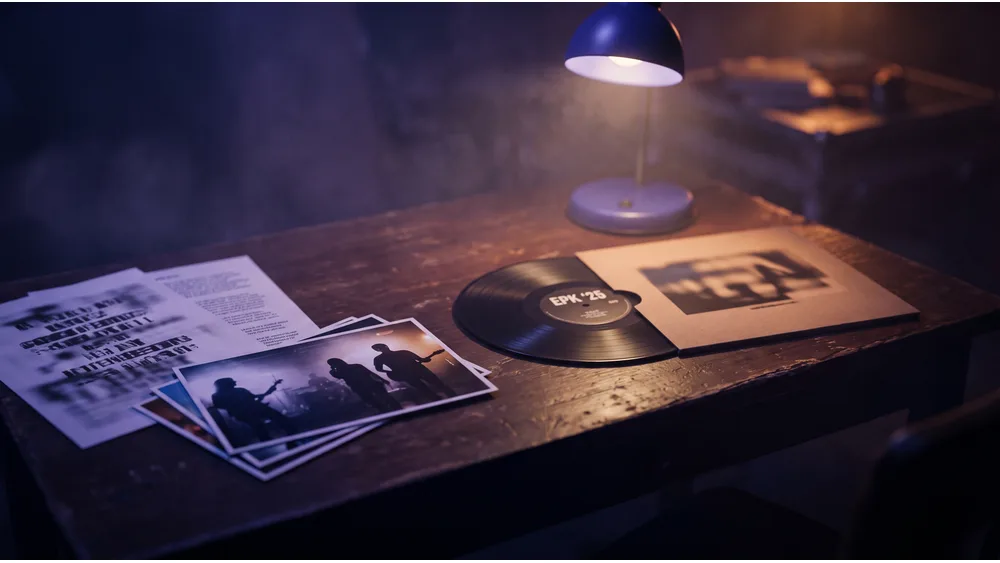
EPK vs socials vs website
Quick boundaries so you do not overbuild:
| Asset | Job |
|---|---|
| Socials | Daily proof of life, promo, community |
| Website | Home base, mailing list, merch, deeper story |
| EPK | Fast buyer decision: hear, see, trust, contact |
Socials change algorithms; your EPK should stay stable and professional. Website can be broader; EPK should stay ruthless about booking and press needs.
Rule of thumb: if it helps a stranger say yes to a date or a feature, it belongs in the EPK. Merch drops and memes stay on socials. Long-form history and store links live on the website. Update the kit on a schedule so booking links never trail a dead member photo.
FAQ
Do we need a PDF and a web EPK?
A fast mobile web page is the priority. A one-page PDF can help press or grant packets. Do not force bookers to download a PDF just to hear one song.
How long should live video be?
One complete song is ideal. If you only have a ninety-second cut, make sure it includes vocals and a representative section of the arrangement—not only the crowd scream at the end.
Should we include covers on the EPK?
Lead with originals unless you are a working covers act pitching covers rooms. If a cover video is your only strong live take, use it temporarily and replace it.
What if we have no press quotes?
Skip fake quotes. Use proof you do have: playlist adds, solid bills, radio, or simply strong audio and video. Empty "Press" headers look worse than no section.
How often should we redesign?
Rarely. Update content often; redesign when navigation or mobile performance is broken. Buyers care about signal, not your new gradient.
Related guides
Founder of Bandmate ®, entrepreneur, and musician helping bands succeed in the modern music industry.
Subscribe to our newsletter
Get the latest news and updates.
No spam. Unsubscribe anytime.