Band Merchandise Guide: Design, Production, and Sales in 2025

Streaming pays fractions. A well-priced shirt at a packed room can pay the van insurance. Merch is not a vibe accessory—it is a product line with design risk, inventory cash, and booth chaos. Bands that treat it like “we should order something cool” end up with boxes of unreadable ink. Bands that treat it like a tiny retail business fund tours.
This guide walks design, sampling, pricing, show ops, inventory, legal basics, and drops—without pretending you need a warehouse or a brand manager.
Why merch still matters for working bands
Fans buy merch to take the night home and to signal belonging. You sell merch to convert attention into cash you control. Unlike a door deal, merch margin is often yours if you run the table. On support tours, merch can outperform the guarantee. Online, drops around releases create urgency streaming never will.
It only works if margin is real and stock turns. Vanity runs—six designs, no samples, mystery sizes—tie up money you needed for gas. Start narrow: one strong shirt, one small item (sticker, patch, tote), optional season specialty. Expand after data, not ego.
Connect merch cash to the rest of your books. Profit after COGS belongs in the system described in manage band finances, and member splits should follow rules in how to split band revenue—especially who funded the print run.
Design for ten feet away, not for your laptop zoom
Club lighting is bad. Buyers glance while holding a beer. Designs that win:
- Large, simple focal graphic or wordmark
- High contrast on the fabric color you actually ordered
- Readable band name (even if secondary)
- One idea per garment, not a collage of every era
Test the mock at thumbnail size on your phone. If it turns to mud, simplify. Back prints sell for fans who already own the front; do not force a back print if budget is tight—front quality beats two weak sides.
Colorways: one black, one light if you can afford two; otherwise nail one. Limited colorways beat a rainbow of dead stock. Hire a designer who understands print methods (screen vs DTG vs embroidery) so you do not approve art that cannot print cleanly. For supplier starting points, browse merchandise suppliers.
Sample before you bulk—always
Never greenlight 200 units from a digital mock alone. Order samples for:
- Fit and shrink on the blank brand you chose
- Print texture and durability after a wash
- True color on fabric vs screen
- Neck label / print placement surprises
Wear the sample on a rehearsal night. If the collar is scratchy or the print cracks after one wash, fix it now. Sampling costs less than a pallet of regret. When comparing printers, ask about underbase on dark garments, ink type, and turnaround before a known tour date—rush fees destroy margin.
Size runs: check your crowd. If you sell mostly mediums and larges, do not hero-order smalls because the size chart looked symmetrical. Keep a simple sell-through log by size after each show.
Price for margin, not for “what feels friendly”
Build landed cost: blanks + print + shipping to you + duties if any + design fee amortized over the run + packaging. Then add:
- Card fees (often 2–3%+)
- Platform fees for online
- Venue merch cuts if the room takes a percentage
- Your time (honestly)
A common working target is roughly 2×–2.5× landed cost for apparel at the booth, adjusted for your market and quality tier. If landed cost is $14, $25–$35 is a normal conversation depending on city and fabric. Underpricing to “be nice” trains fans to expect charity economics and leaves you unable to restock.
Publish prices clearly. Bundle (shirt + sticker) only if the bundle increases total margin, not just unit count. Taxes: know whether you must charge sales tax in your state and at out-of-state shows—ask a professional if volume is real; guessing is expensive.
Booth ops that do not leave money on the floor
Great art dies behind a dark corner table. Basics:
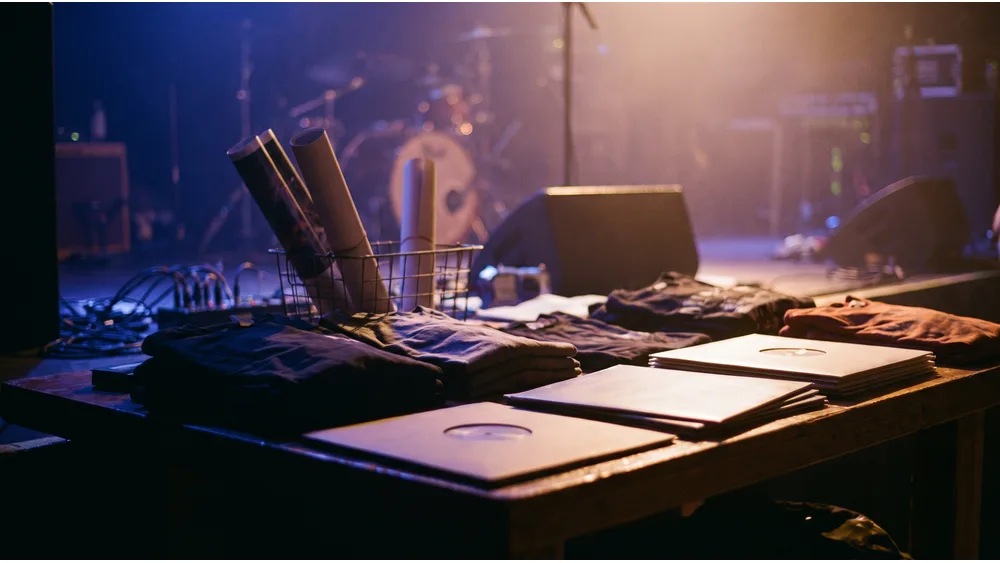
- Light the display; phones as flashlights are not a plan
- Vertical display so designs face the room
- One person minding cash/card during peak—do not abandon the table for the bar during the headliner’s last song if you just played
- Float for change if you take cash; card reader with offline mode if the venue is a Faraday cage
- QR to online shop for sizes you blew through
- Setlist-adjacent timing: open early, staff hard after your set
Train anyone selling: two-sentence pitch, size guidance, “this is the soft tee / this is the tour exclusive.” Smile is strategy. Theft happens—keep high-value items watched; do not leave the cash box unattended.
Log sales that night: units, sizes, cash vs card, comps. Morning-after memory is fiction. Those numbers feed restock and income tracking.
Inventory discipline: winners, losers, storage, cash
Inventory is cash wearing cotton. Rules:
- Count stock after every run of shows
- Restock only SKUs that sell through
- Discount dogs once—then stop ordering them
- Store clean and dry; mildew is a write-off
- Cap total capital stuck in merch as a percentage of band reserve
Know who “owns” the boxes legally and physically. If merch lives at one member’s apartment, document access. When someone leaves the band, inventory disputes get vicious without a clause in your band contract.
Online inventory should match reality. Overselling a size you do not have is how you spend a week apologizing.
Legal basics you should not freestyle
Do not print trademarks you do not control (other bands, sports teams, film properties, beer logos “for the aesthetic”). Parody is not a magic shield. Fan art of other IP can still get you a cease-and-desist.
Your own logo: keep master files; decide ownership in the band agreement. Collaborations with visual artists: written license for merch use, territory, and duration. Photo of a person who is not in the band: model release if commercial use is broad.
If you sell across borders, research restricted materials and labeling rules. For anything that smells like a real brand deal or retail wholesale, get counsel. This section is common-sense risk reduction, not a legal opinion.
Bundles, drops, and release-week timing
Drops work when they are scarce and timed:
- New design with a single announce date
- Preorder window to fund the run without gambling the whole band account
- VIP / mailing-list early access
- Show-exclusive colorway for tour legs
- Bundle with digital download or limited zine if fulfillment is realistic
Do not launch four drops a month. You will train fans to wait and burn your team out. Align one strong drop with a single, video, or tour announce. Email list still outperforms “we posted a story once” for actual sales.
Fulfillment: if you hate packing, price in a fulfillment partner or keep SKUs few enough that a Saturday packing party works. Late holiday shipping is how you spend January on refunds.
A first-run checklist (30–60 days)
Week 1: Pick one garment + one small; hire or finalize art; choose blank brand.
Week 2: Sample; wash test; lock sizes and price from landed cost worksheet.
Week 3: Place bulk order timed to land before the target show; set up card reader and simple inventory sheet.
Week 4: Build booth kit (light, display, bags, float, signage); announce drop date.
Show week: Sell, log, photograph fans in merch (with consent) for social proof.
Following week: Reconcile cash, restock decision, update finance ledger and split rules if a member floated the order.
Then iterate. Merch skill compounds: better size curves, better printers, cleaner designs, faster booth lines.
Online shop without drowning in shipping
You do not need a full storefront on day one. A simple product page with clear photos, sizes, and shipping times beats a half-built theme. Ship twice a week on a fixed schedule so fans get realistic ETAs. Photograph on a body, not only flat lays—people buy fit cues. If volume spikes after a viral clip, pause ads until fulfillment catches up; backlog refunds cost more than missed sales.
Track online and booth as separate channels in your ledger. Online has shipping and platform fees; booth has time and venue cuts. Channel-level margin tells you where to put energy next month. Tie that back to the broader money system in manage band finances so merch never becomes a shadow economy in someone’s Venmo.
FAQ
How many shirts should we order first?
Fewer than your optimism wants. Enough to not sell out in ten minutes if the room is good, not enough to fund a thrift-store future. Many bands start in the 36–72 range per design depending on draw.
Should we do print-on-demand only?
POD is great for testing designs and online long-tail with low risk. Quality and margin are often weaker for the booth. Hybrid is common: POD online experiments, bulk for proven winners.
Who keeps merch money the night of the show?
Band account or locked cash box with a count-out by two people. Never “someone will Venmo later” as the system.
What if a venue takes a merch cut?
Know the percentage before you agree to the date. Price accordingly or negotiate. Factor it into that night’s margin.
Is vinyl merch?
For planning purposes, yes—physical product with COGS and storage. Higher unit cost and breakage risk; order carefully.
Related guides

Founder of Bandmate ®, entrepreneur, and musician helping bands succeed in the modern music industry.
Best Band Management Software: Complete Guide for 2025
Software will not write a chorus or fix a flaky drummer. It will stop the deposit that lived in a text thread, the rehearsal that three people remembered differently, and the “who has the contract PDF?” spiral at midnight before load-in. Bands that still run everything from group chat are competing with bands that treat operations like a small business—without becoming corporate zombies.
Band Payment Tracking: How to Track Who Paid What (and Chase the Rest)
Most bands lose 10-20% of gig income to bad payment tracking. Not because venues are malicious — most aren't — but because bands don't have a system. The venue promises to pay within 30 days, the band forgets, 60 days pass, the booker moves to a new job, and the payment disappears into institutional fog. It's not fraud. It's entropy. And the fix is a payment tracking system that creates accountability on both sides.
Subscribe to our newsletter
Get the latest news and updates.
No spam. Unsubscribe anytime.