Best Band Management Software: Complete Guide for 2025
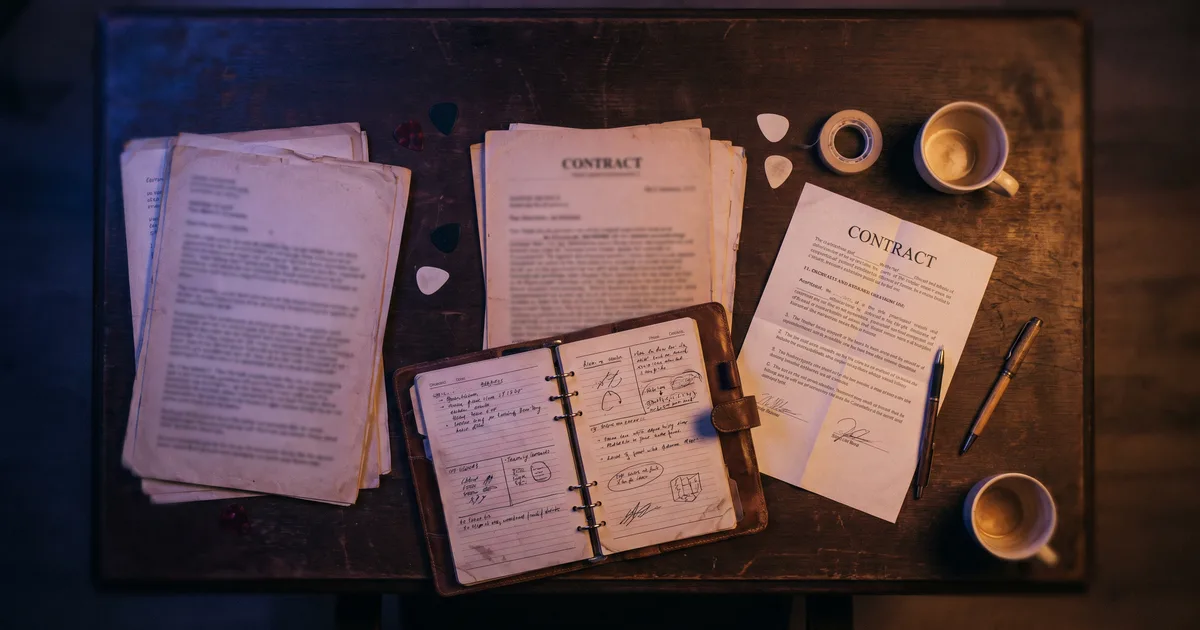
Software will not write a chorus or fix a flaky drummer. It will stop the deposit that lived in a text thread, the rehearsal that three people remembered differently, and the “who has the contract PDF?” spiral at midnight before load-in. Bands that still run everything from group chat are competing with bands that treat operations like a small business—without becoming corporate zombies.
This guide is how to choose tools without buying shelfware: map pain first, understand categories, score options, trial with real data, migrate once, and keep humans accountable. For a curated list of options, pair this with band management tools.
Pain map first—tools second
List the last five operational failures. Be specific:
- Lost a hold because the date was only in one person’s head
- Double-booked a Saturday
- Could not find the signed rider
- Fought about money with no shared ledger
- Ghosted a venue because the email lived in a departed member’s inbox
Circle the failures that cost money, relationships, or shows. Those are purchase criteria. Everything else is nice-to-have marketing copy. If your only pain is “we need to practice more,” buy calendar discipline, not a suite.
Also name what already works. If shared drives are fine and money is the dumpster fire, do not rip out file storage for a shiny all-in-one you will half-adopt. Replacement cost includes re-training four adults with day jobs.
Category map: what “band software” actually means
Vendors blur categories. Keep them separate so you do not compare apples to lighting designers.
Scheduling and calendars. Rehearsals, holds, flights, conflicts. Must sync to phones people already open. See also shared calendar for bands and create a band schedule.
Files and documents. Contracts, W-9s, art masters, set lists, input lists. Version control matters. Related: band document storage, how to organize band files.
Contacts and CRM-ish tracking. Venues, promotors, freelancers, fans-as-business-contacts. Spreadsheets vs dedicated tools: band CRM vs spreadsheets, band CRM software.
Booking pipeline. Stages from lead to paid, deposits, follow-ups. Deep dive: band booking pipeline.
Finance. Income, expenses, splits, payouts, receipts. Core reading: manage band finances, how to split band revenue.
Tasks and communication. Who owns advancing the show, posting the flyer, packing merch. Chat is not a task system—threads bury deadlines. See band task management and centralize band communication.
Creative collaboration. DAW project hosts, lyric docs, rehearsal media—often separate from “business” tools on purpose.
You may need two or three tools. You almost never need eight.
Scorecard: how to evaluate without demo theater
Rate each candidate 1–5 on:
- Fit to top three pains — not feature count
- Mobile reality — will the bassist actually update status from a parking lot?
- Permissions — shared visibility without every temp player seeing bank exports
- Export / exit — CSV/PDF of your data when you leave
- Price at your real seat count — include the “pro” tier you will need in six months
- Learning curve — hours to first useful week, not first login
- Support and stability — dead tools strand history
- Integrations — calendar, email, payment, storage you already pay for
Weight fit and export highest. Pretty UI without export is a hostage situation. Dirt-cheap tools that nobody opens are free only in the subscription sense.
Run this scorecard for two finalists only. Committee shopping seven apps is procrastination.
Trial with real data (or you are testing a brochure)
A useful trial is two weeks of real operations:
- Enter actual upcoming holds and rehearsals
- Upload two real contracts and one rider
- Log real expenses and a sample payout
- Assign real tasks with due dates
- Have every full member log in at least twice
Then ask: Did anything get easier under stress? Did anyone refuse the tool? Did a show get advanced faster? If the trial only contains fake “Test Venue,” you learned nothing.
Success criteria example: “No gig detail lives only in SMS; finance lead produces a one-page money summary from the tool; calendar conflicts visible seven days ahead.” If criteria fail, decline—even if the sales page was inspiring.
Migration plan that does not strand half the band
Pick an owner for migration—one human. Schedule a kill date for the old “system” (the chat pin, the ancient sheet).
Clean inputs: standardize venue names, member emails, status labels. Garbage in becomes permanent.
Move critical path first: calendar and next 60 days of gigs, then contracts, then historical finances if needed.
Archive legacy: old sheet becomes read-only with a banner “do not edit—see new hub.”
Train in one hour, not a seminar: five workflows only (add gig, find file, log expense, mark task done, check calendar).
Consequences: after kill date, information in the old channel does not count. Harsh, effective.
If a member will not adopt after coaching, that is a band process issue, not a software bug.
Human process still required
Tools amplify habits. They do not install habits.
Keep:
- A monthly business meeting (money, holds, conflicts, one process fix)
- Named roles: booking, finance, content, gear
- Written money rules and a membership agreement (band contract template)
- Response-time norms for booking email
Without those, software becomes an empty museum of unfinished tasks. With those, even a basic stack performs.
Stack minimalism: one source of truth per job
Rules of thumb:
- One calendar of record
- One file hub of record
- One finance ledger of record
- One place tasks are assigned
Chat can notify; it should not store. Email can negotiate; the outcome should land in the pipeline. Duplicate entry is how systems rot—if you must double-enter, the stack is wrong.
Review the stack twice a year. Cancel what you have not opened in 30 days. Orphan subscriptions are a tax on disorganization.
When Bandmate fits (and when to look elsewhere)
Bandmate is built for the messy middle of working bands: coordinating people, gigs, and the operational layer that usually lives in five apps and a panic text. It fits when your bottleneck is shared visibility—who is in, what is booked, what needs doing—more than, say, multi-track session hosting or enterprise tour accounting for a thirty-person crew.
It is not a magic fix for a group that refuses any system. No tool is. If you need pure accounting depth (full payroll, complex multi-entity), you may still want a dedicated finance tool beside a coordination layer. If you only need a free calendar, use a free calendar.
Try software against your pain map, not against a feature checklist copied from a blog. Start at Bandmate signup when coordination cost is burning shows and friendships.

Thirty-day adoption plan
Week 1: Pain map + scorecard; pick one primary platform; assign admin.
Week 2: Migrate calendar + active gigs; invite all full members; kill dual calendars.
Week 3: Move contracts and contacts; define folder and status conventions.
Week 4: Finance logging live; first monthly meeting run from the tool’s reports; cancel one redundant app.
Measure: fewer “where is…” messages, faster answers to “are we free that weekend?”, and payouts without archaeological digs. If those metrics do not move, change process before buying another subscription.
Common shelfware patterns (avoid these)
Buying for the band you wish you were. Enterprise tour features for a five-piece that plays regionally once a month. Pay for the season you are in.
One champion, zero adoption. The organized member builds a cathedral; everyone else keeps texting. Adoption is a band meeting agenda item, not a solo hobby.
Feature tourism. Switching tools every quarter because a thread recommended something new. Switching cost is real: lost history, lost habits, lost trust in “the system.”
Chat as the database again. Installing software then still confirming gigs only in SMS. If the tool is not the source of truth, cancel it.
When money is part of the stack, keep the same discipline as manage band finances: one ledger, visible to the people who need it, exportable when you leave.
FAQ
Do we need paid software to look professional?
Venues care that you show up prepared with clear advances and reliable communication. Tools help you deliver that; the logo on the invoice matters less than the deposit clearing on time.
Spreadsheets vs dedicated apps?
Spreadsheets win at custom math and tiny scale. They lose at mobile updates, permissions, and reminders. Many bands outgrow sheets when more than three people touch the same workflows daily. See CRM vs spreadsheets.
What if half the band hates new apps?
Adopt the smallest tool that solves the costliest pain. Train with real gigs. If refusal continues, address accountability in a band meeting—software cannot outvote culture.
How do we avoid lock-in?
Prefer exportable data, standard file formats for assets, and calendar feeds you control. Keep master art and legal PDFs in a neutral drive even if a platform also stores copies.
Should each member pay their own seat?
Decide explicitly. Band account paying seats reduces “I cancelled my login.” Personal seats die when someone is broke or bitter.
Related guides

Founder of Bandmate ®, entrepreneur, and musician helping bands succeed in the modern music industry.
Band Income Tracking: Stop Losing Track of Who Owes You
Bands lose thousands of dollars per year to poor income tracking. Not because the money doesn't exist, but because nobody follows up. The venue says they'll pay within 30 days — 60 days pass, no check, and the band forgot to follow up. The merch table brought in $400 cash — half of it was counted wrong and the rest got spent on dinner. The streaming royalty hit the band account — but nobody knows which platform sent it or which release it's for, so it can't be reconciled.
Band Merchandise Guide: Design, Production, and Sales in 2025
Streaming pays fractions. A well-priced shirt at a packed room can pay the van insurance. Merch is not a vibe accessory—it is a product line with design risk, inventory cash, and booth chaos. Bands that treat it like “we should order something cool” end up with boxes of unreadable ink. Bands that treat it like a tiny retail business fund tours.
Subscribe to our newsletter
Get the latest news and updates.
No spam. Unsubscribe anytime.