Time-Wasting Assessment
Time-Wasting Assessment
You booked the space, four people showed up, and somehow two hours later you've run two songs and nobody's sure what got accomplished. If that feels familiar, the problem usually isn't motivation — it's that nobody can see exactly where the time is going. This assessment is built to fix that.
It's a two-part tool. First you score how often ten common time-wasters hit your band and how much rehearsal time each one eats up. Then you pick the top three, pull from the solutions bank, and commit to a four-week experiment with a measurement plan at the end.
Run it when rehearsals feel unproductive but you can't say why. Run it when one or two members are visibly frustrated. Run it before anyone suggests blowing up the band. Most of all, run it once even if you think everything's fine — the data is almost always surprising.
Why Assess Time-Wasting?
With assessment:
- Identify inefficiencies
- Eliminate waste
- Use time better
- Accomplish more
- Less frustration
Without assessment:
- Don't know where time goes
- Repeat same mistakes
- Waste time
- Slow progress
- Frustration
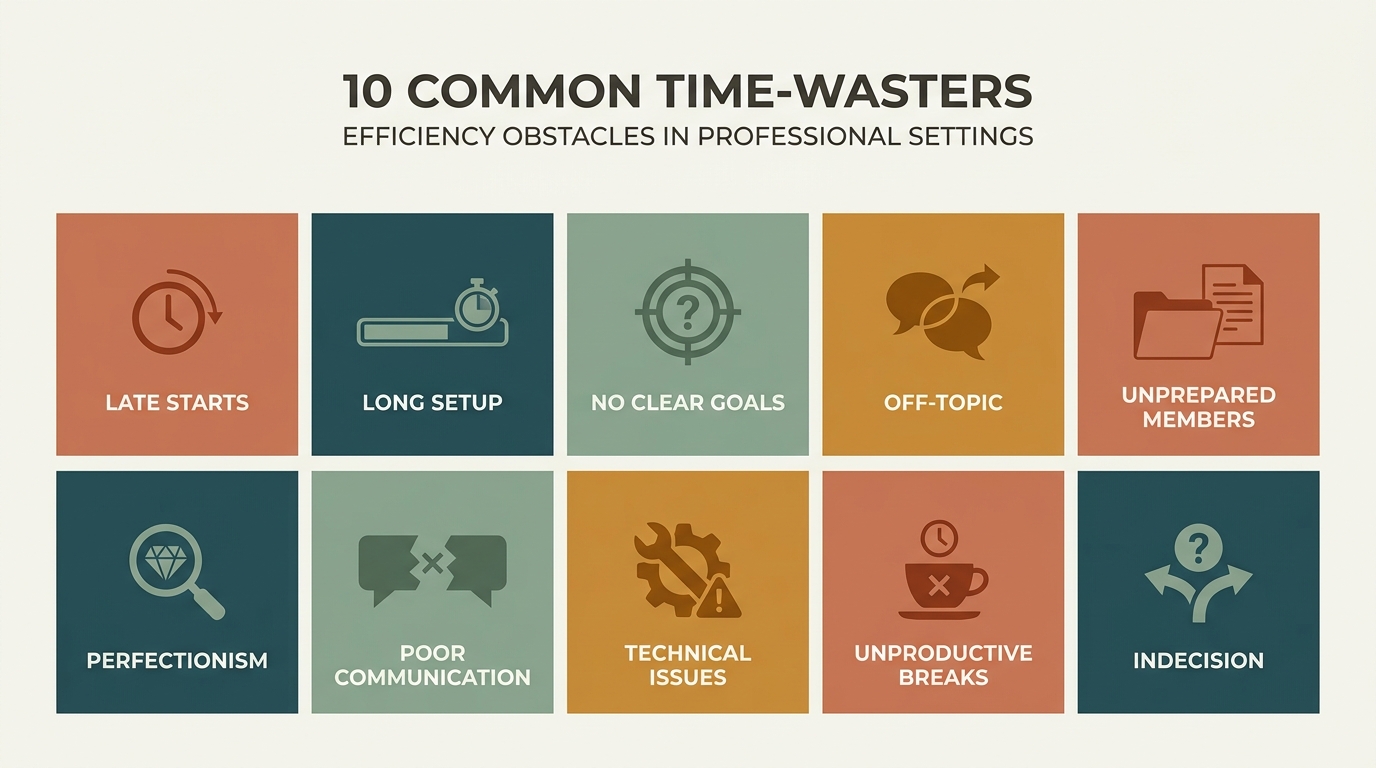
Common Time-Wasters
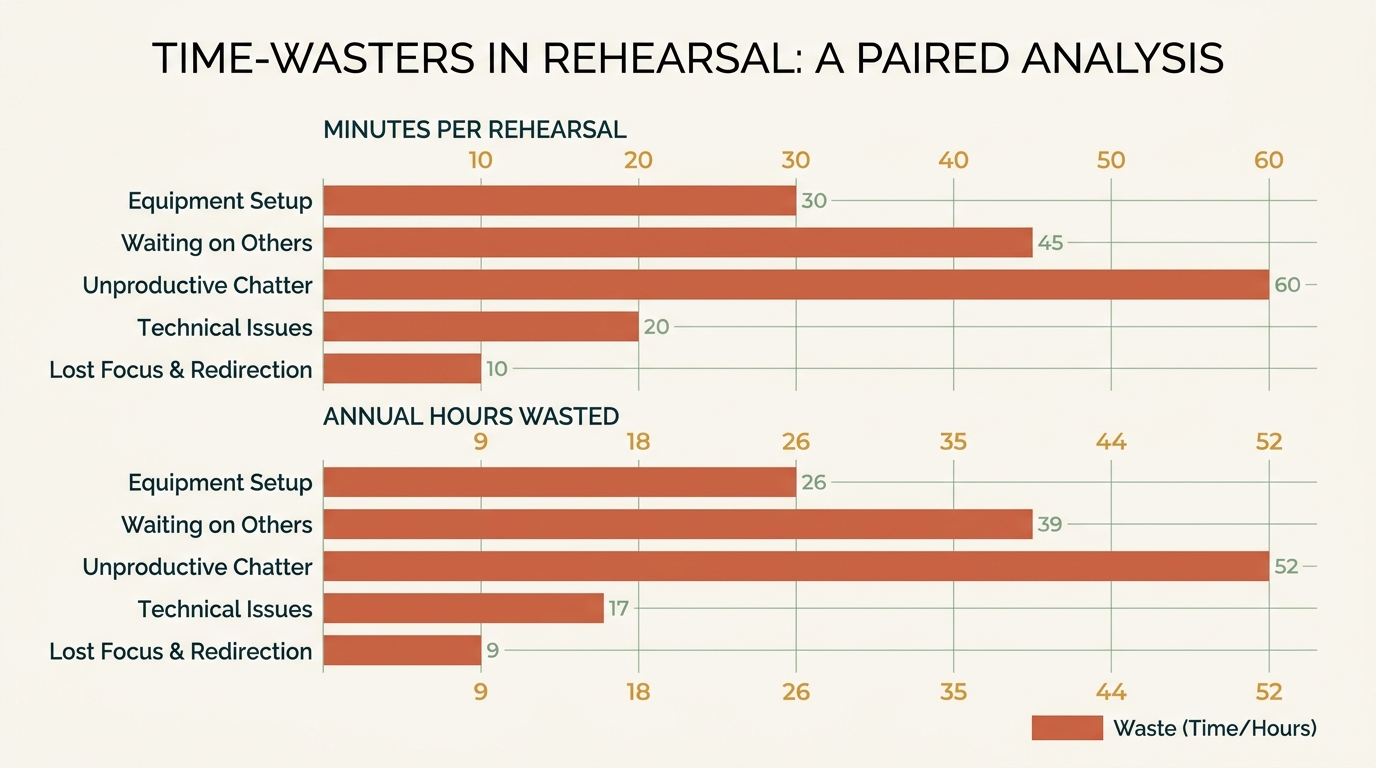
Before you score anything, you need a shared vocabulary for what you're actually losing time to. The next section walks through the ten patterns that show up most often in band rehearsals — and how much time each one typically eats per session and over a year. Don't worry about whether each one applies to your band yet; just read through and let the descriptions trigger recognition.
1. Late Starts
What it looks like:
- People arrive late
- Wait for everyone
- Start 15-30 minutes late
Time wasted: 15-30 minutes per rehearsal
Annual impact: 13-26 hours wasted
2. Long Setup/Breakdown
What it looks like:
- Disorganized setup
- Missing equipment
- Technical issues
- Slow breakdown
Time wasted: 10-20 minutes per rehearsal
Annual impact: 9-17 hours wasted
3. No Clear Goals
What it looks like:
- "What should we work on?"
- Deciding during rehearsal
- Unclear priorities
- Wandering focus
Time wasted: 10-30 minutes per rehearsal
Annual impact: 9-26 hours wasted
4. Off-Topic Conversations
What it looks like:
- Social chatting
- Unrelated discussions
- Tangents
- Distractions
Time wasted: 15-45 minutes per rehearsal
Annual impact: 13-39 hours wasted
5. Unprepared Members
What it looks like:
- Learning parts in rehearsal
- "Can you show me that again?"
- Constant stopping
- Slow progress
Time wasted: 20-60 minutes per rehearsal
Annual impact: 17-52 hours wasted
6. Perfectionism
What it looks like:
- Repeating endlessly
- Never moving on
- Diminishing returns
- Stuck on details
Time wasted: 15-30 minutes per rehearsal
Annual impact: 13-26 hours wasted
7. Poor Communication
What it looks like:
- Unclear instructions
- Misunderstandings
- Repeated explanations
- Confusion
Time wasted: 10-20 minutes per rehearsal
Annual impact: 9-17 hours wasted
8. Technical Issues
What it looks like:
- Equipment problems
- Sound issues
- Troubleshooting
- Fixing gear
Time wasted: 10-30 minutes per rehearsal
Annual impact: 9-26 hours wasted
9. Unproductive Breaks
What it looks like:
- Too long
- Too frequent
- Hard to restart
- Lost momentum
Time wasted: 10-20 minutes per rehearsal
Annual impact: 9-17 hours wasted
10. Indecision
What it looks like:
- Can't make decisions
- Endless discussion
- No resolution
- Revisiting decisions
Time wasted: 15-30 minutes per rehearsal
Annual impact: 13-26 hours wasted
Time-Wasting Assessment
Now that you've seen the patterns, it's time to score your own band against them. The form below is the diagnostic — one entry per time-waster, with a frequency rating, time estimate, and annual impact calculation. Don't try to be precise to the minute; rough honesty is fine. The goal is to produce a ranked list of your top three problems, not to win a math prize.
For each time-waster:
- Rate how often it happens (1-5)
- Estimate time wasted per rehearsal
- Calculate annual impact
- Prioritize for action
Assessment Form
1. Late Starts
How often? (1-5)
- 1 = Never
- 2 = Rarely
- 3 = Sometimes
- 4 = Often
- 5 = Always
Your rating: ___/5
Time wasted per rehearsal: ___ minutes
Annual impact: ___ hours (minutes × 52 ÷ 60)
Priority: High / Medium / Low
2. Long Setup/Breakdown
How often? (1-5): ___/5
Time wasted per rehearsal: ___ minutes
Annual impact: ___ hours
Priority: High / Medium / Low
3. No Clear Goals
How often? (1-5): ___/5
Time wasted per rehearsal: ___ minutes
Annual impact: ___ hours
Priority: High / Medium / Low
4. Off-Topic Conversations
How often? (1-5): ___/5
Time wasted per rehearsal: ___ minutes
Annual impact: ___ hours
Priority: High / Medium / Low
5. Unprepared Members
How often? (1-5): ___/5
Time wasted per rehearsal: ___ minutes
Annual impact: ___ hours
Priority: High / Medium / Low
6. Perfectionism
How often? (1-5): ___/5
Time wasted per rehearsal: ___ minutes
Annual impact: ___ hours
Priority: High / Medium / Low
7. Poor Communication
How often? (1-5): ___/5
Time wasted per rehearsal: ___ minutes
Annual impact: ___ hours
Priority: High / Medium / Low
8. Technical Issues
How often? (1-5): ___/5
Time wasted per rehearsal: ___ minutes
Annual impact: ___ hours
Priority: High / Medium / Low
9. Unproductive Breaks
How often? (1-5): ___/5
Time wasted per rehearsal: ___ minutes
Annual impact: ___ hours
Priority: High / Medium / Low
10. Indecision
How often? (1-5): ___/5
Time wasted per rehearsal: ___ minutes
Annual impact: ___ hours
Priority: High / Medium / Low
Total Time Wasted
Per rehearsal: ___ minutes
Per year: ___ hours
That's ___ full rehearsals wasted per year!
Solutions by Time-Waster
Once you've identified your top time-wasters, this is the playbook for each one. We've listed practical solutions for every pattern, plus implementation notes. Pick two or three fixes per problem rather than trying to overhaul everything at once — small changes that stick beat ambitious overhauls that don't.
1. Late Starts
Solutions:
- Set clear start time
- Start on time regardless
- Consequences for lateness
- Arrive 10 minutes early
- Send reminders
Implementation:
- Announce policy
- Start on time
- Be consistent
- Track attendance
2. Long Setup/Breakdown
Solutions:
- Arrive early to set up
- Organized gear storage
- Checklist of equipment
- Assign setup roles
- Leave gear set up (if possible)
Implementation:
- Create equipment checklist
- Assign responsibilities
- Practice efficient setup
- Invest in organization
3. No Clear Goals
Solutions:
- Set goals before rehearsal
- Send agenda in advance
- Review goals at start
- Stay focused on goals
Implementation:
- Plan rehearsals
- Communicate goals
- Review at check-in
- Track progress
4. Off-Topic Conversations
Solutions:
- Socialize before/after
- Stay focused during
- Timekeeper redirects
- Scheduled breaks
Implementation:
- Arrive early to socialize
- Assign timekeeper
- Take breaks
- Stay disciplined
5. Unprepared Members
Solutions:
- Clear preparation expectations
- Send materials in advance
- Accountability system
- Consequences for unpreparedness
Implementation:
- Set expectations
- Communicate requirements
- Track preparation
- Address issues
6. Perfectionism
Solutions:
- Time-box activities
- "Good enough" mindset
- Diminishing returns awareness
- Move on when productive time ends
Implementation:
- Use timer
- Set completion criteria
- Move on when time's up
- Trust the process
7. Poor Communication
Solutions:
- Clear, specific instructions
- Confirm understanding
- Visual aids (charts, recordings)
- Establish communication norms
Implementation:
- Be specific
- Ask for confirmation
- Use multiple methods
- Practice clarity
8. Technical Issues
Solutions:
- Maintain equipment
- Backup equipment
- Troubleshooting knowledge
- Quick fixes only
Implementation:
- Regular maintenance
- Have backups
- Learn basics
- Don't waste rehearsal time
9. Unproductive Breaks
Solutions:
- Scheduled breaks
- Time-limited breaks
- Timer for breaks
- Clear restart time
Implementation:
- Schedule breaks
- Set timer
- Announce restart
- Start on time
10. Indecision
Solutions:
- Decision-making framework
- Time-box discussions
- Designated decision-maker
- "Decide and move on" mindset
Implementation:
- Use framework
- Set time limits
- Empower leader
- Make decisions
Action Plan
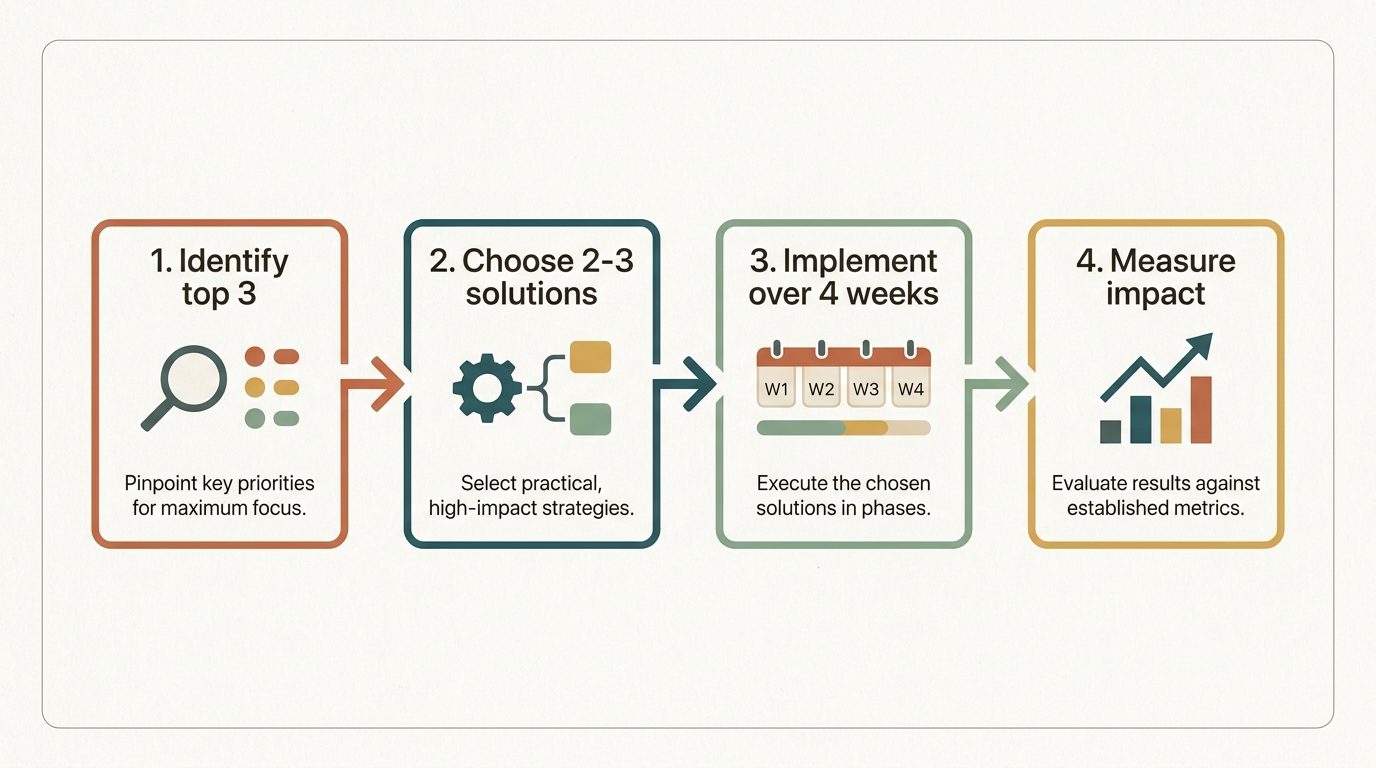
Solutions don't help if they stay abstract. The next section turns your top three picks into concrete commitments: who's responsible, what they're doing, when it starts, and how you'll know it worked. Treat it like a contract with yourself — vague plans produce vague results.
Step 1: Identify Top 3 Time-Wasters
Based on your assessment:
1. _______________
- Time wasted: ___ minutes/rehearsal
- Annual impact: ___ hours
2. _______________
- Time wasted: ___ minutes/rehearsal
- Annual impact: ___ hours
3. _______________
- Time wasted: ___ minutes/rehearsal
- Annual impact: ___ hours
Step 2: Choose Solutions
For each time-waster, choose 2-3 solutions:
Time-waster 1:
- Solution 1: _______________
- Solution 2: _______________
- Solution 3: _______________
Time-waster 2:
- Solution 1: _______________
- Solution 2: _______________
- Solution 3: _______________
Time-waster 3:
- Solution 1: _______________
- Solution 2: _______________
- Solution 3: _______________
Step 3: Implementation Plan
What will we do?
Who's responsible?
When will we start?
How will we track progress?
Step 4: Measure Impact
After 4 weeks, reassess:
Time-waster 1:
- Before: ___ minutes wasted
- After: ___ minutes wasted
- Improvement: ___ minutes saved
Time-waster 2:
- Before: ___ minutes wasted
- After: ___ minutes wasted
- Improvement: ___ minutes saved
Time-waster 3:
- Before: ___ minutes wasted
- After: ___ minutes wasted
- Improvement: ___ minutes saved
Total time saved per rehearsal: ___ minutes
Annual time saved: ___ hours
Ongoing Assessment
The four-week experiment gives you a baseline; the next section explains how to keep the gains from drifting back. Time-wasters have a way of sneaking back in once attention shifts elsewhere, so building a lightweight monthly check and a deeper quarterly review into the band's rhythm is what turns a one-time fix into lasting culture.
Monthly Check
Review time usage:
- Where did time go?
- New time-wasters?
- Solutions working?
- What to adjust?
Quarterly Deep Dive
Comprehensive assessment:
- Complete full assessment
- Identify new issues
- Adjust solutions
- Set new goals
Key Takeaways
- Identify time-wasters - Know where time goes
- Quantify impact - Calculate annual waste
- Prioritize - Focus on biggest wasters
- Implement solutions - Take action
- Measure results - Track improvement
- Stay vigilant - New time-wasters emerge
- Continuous improvement - Always optimize
Small improvements in efficiency compound over time. Eliminate time-wasters and accomplish more in every rehearsal.
Subscribe to our newsletter
Get the latest news and updates.
No spam. Unsubscribe anytime.


Bandmate® is the complete platform for musicians, bands, and venues to connect, collaborate, and grow. Find bandmates, discover venues, and build your music career with tools designed by musicians, for musicians.