Behavioral Interview Questions
Behavioral Interview Questions
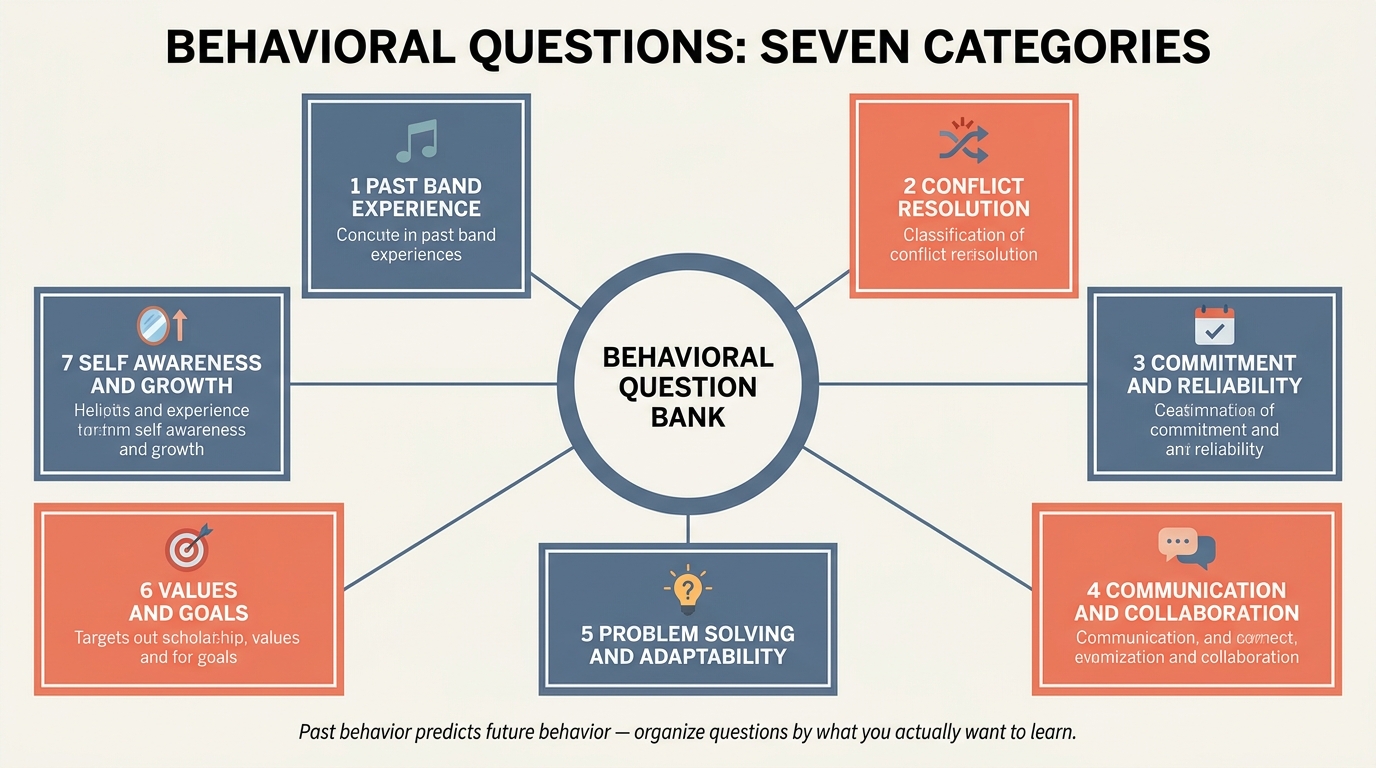
You know a player sounds good in the first ten seconds. What you don't know — what you can't know until you ask — is whether they'll show up, take feedback, handle conflict without exploding, and pull their weight when no one's watching. That's what behavioral questions are for.
This bank is organized by the situations you actually care about: how candidates talk about past bands, how they handle conflict, whether they're reliable, how they collaborate, and whether they have any self-awareness at all. Each question comes with what you're really trying to learn from the answer, plus follow-ups that dig past the polished first response.
Use it as a working script, not a script to memorize. Pick the questions that match what your band actually needs, drop the ones that don't, and spend more time listening than talking. The candidate who fills two minutes with vague platitudes is telling you something. So is the one who pauses, names a specific moment, and says what they learned from it.
The hardest part of running a behavioral interview isn't picking the questions — it's slowing yourself down enough to actually hear what's underneath the answers. Most bands talk too much during auditions, fill silences with their own observations, and miss the candidate's hesitations because they're already mentally moving to the next question. Force yourself to leave two beats of silence after every answer. That pause is where the real signal lives.
Why Behavioral Questions Matter
Knowing what these questions can reveal is one thing. Running a productive interview is another. The section after this covers the mechanics — how to ask, what to listen for, and the follow-ups that separate honest answers from rehearsed ones.
What They Reveal:
- How they've handled past situations
- Their values and priorities
- Communication and conflict styles
- Self-awareness and growth
- Red flags and concerns
- Cultural fit with your band
Better Than:
- Hypothetical questions ("What would you do if...")
- Leading questions ("You're reliable, right?")
- Yes/no questions
- Assumptions based on vibe alone
How to Use Behavioral Questions
With the mechanics clear, here's the actual question bank. It's grouped by what you're trying to learn — past band history, conflict, commitment, collaboration, problem-solving, values, and self-awareness. Pick a few from each category rather than hammering one topic, and let the conversation breathe instead of running it like a checklist.
Best Practices
- Ask open-ended questions - Let them talk
- Listen more than you speak - Their answer tells you everything
- Ask follow-up questions - Dig deeper
- Look for patterns - One story vs. consistent behavior
- Note what they don't say - Omissions matter
- Watch body language - Discomfort can be revealing
- Give them time - Don't rush their answers
What to Listen For
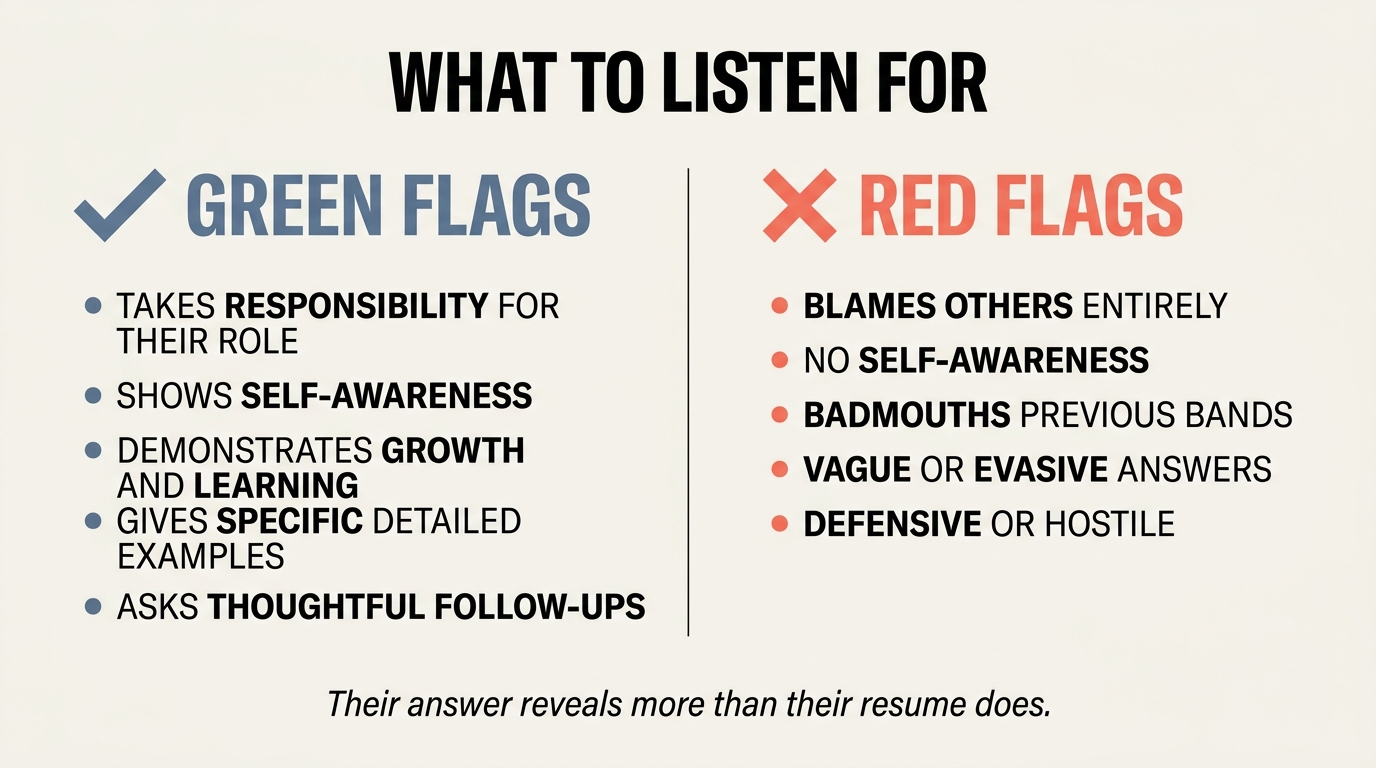
Green Flags:
- Takes responsibility for their role
- Shows self-awareness
- Demonstrates growth and learning
- Speaks positively about past experiences
- Gives specific, detailed examples
- Shows emotional intelligence
- Asks thoughtful follow-up questions
Red Flags:
- Blames others entirely
- No self-awareness
- No evidence of learning
- Badmouths previous bands
- Vague or evasive answers
- Defensive or hostile
- Doesn't ask any questions
Question Bank by Category
The questions themselves are only half the tool. The follow-ups are where you find out whether someone can actually reflect on their own behavior — or whether they've just rehearsed a good story. The next section covers follow-up strategies and how to read between the lines when the answer feels off.
Past Band Experience
1. "Tell me about your most recent band experience."
What you're assessing: Overall experience, what they valued, why it ended
Follow-ups:
- "What did you enjoy most about that band?"
- "What was challenging?"
- "What did you learn from that experience?"
2. "Why did you leave your last band?"
What you're assessing: Reason for leaving, how they talk about it, their role in the situation
Listen for:
- Taking responsibility vs. blaming others
- Legitimate reasons vs. red flags
- How they describe other members
- Whether story is consistent
Follow-ups:
- "What was your role in that situation?"
- "What would you do differently now?"
- "Are you still in touch with those members?"
3. "What was the best band you've been in? What made it great?"
What you're assessing: What they value in a band, their ideal environment
Follow-ups:
- "What was your role in making it great?"
- "Why did it end?"
- "What from that experience do you want to recreate?"
4. "What was your most challenging band experience?"
What you're assessing: How they handle difficulty, resilience, problem-solving
Follow-ups:
- "How did you handle it?"
- "What did you learn?"
- "Would you do anything differently now?"
5. "Have you ever had to leave a band? What happened?"
What you're assessing: How they handle transitions, communication, responsibility
Follow-ups:
- "How did you communicate your decision?"
- "How did the band react?"
- "What did you learn from that experience?"
Conflict Resolution
6. "Tell me about a time you had a disagreement with a bandmate. How did you handle it?"
What you're assessing: Conflict style, communication, resolution skills
Listen for:
- How they approached the conflict
- Whether they took responsibility
- How they describe the other person
- Whether it was resolved
- What they learned
Follow-ups:
- "What was your role in the conflict?"
- "How did you approach the conversation?"
- "What was the outcome?"
- "What would you do differently now?"
7. "Describe a time when you received critical feedback about your playing or behavior. How did you respond?"
What you're assessing: Openness to feedback, defensiveness, growth mindset
Follow-ups:
- "How did you feel in the moment?"
- "What did you do with that feedback?"
- "Did it change anything?"
8. "Have you ever had to give difficult feedback to a bandmate? How did you approach it?"
What you're assessing: Communication skills, courage, empathy
Follow-ups:
- "How did they respond?"
- "What made it difficult?"
- "What did you learn from that experience?"
9. "Tell me about a time when band members disagreed about a decision. What happened?"
What you're assessing: How they handle group conflict, decision-making style
Follow-ups:
- "What was your role in the discussion?"
- "How was it resolved?"
- "Were you satisfied with the outcome?"
Commitment & Reliability
10. "Tell me about a time when you had to miss a rehearsal or show. What happened?"
What you're assessing: How they handle conflicts, communication, responsibility
Listen for:
- How much advance notice they gave
- How they communicated
- Whether they took responsibility
- What they did to minimize impact
- Whether it was avoidable
Follow-ups:
- "How did you communicate with the band?"
- "What did you do to minimize the impact?"
- "What did you learn from that?"
11. "Describe a time when you had competing priorities with band commitments. How did you handle it?"
What you're assessing: Priority-setting, problem-solving, communication
Follow-ups:
- "How did you decide what to prioritize?"
- "How did the band react?"
- "Would you handle it differently now?"
12. "Tell me about the most committed you've ever been to a musical project. What did that look like?"
What you're assessing: Their definition of commitment, capacity for dedication
Follow-ups:
- "What made you that committed?"
- "What did you sacrifice or prioritize?"
- "Is that level of commitment sustainable for you now?"
13. "Have you ever had to tell a band you couldn't continue? How did you handle it?"
What you're assessing: Communication, responsibility, how they handle difficult conversations
Follow-ups:
- "How much notice did you give?"
- "How did you communicate it?"
- "What was their reaction?"
Communication & Collaboration
14. "Tell me about a time when you and your bandmates created something you were really proud of. What was your role?"
What you're assessing: Collaboration style, how they share credit, contribution
Listen for:
- Whether they share credit
- Their specific contribution
- How they talk about others' roles
- Pride in collective vs. individual achievement
Follow-ups:
- "What was your specific contribution?"
- "How did the collaboration work?"
- "What made it successful?"
15. "Describe a time when your idea was rejected by the band. How did you handle it?"
What you're assessing: Ego, resilience, ability to let go
Follow-ups:
- "How did you feel about it?"
- "Did you understand their reasoning?"
- "Did it affect your relationship with the band?"
16. "Tell me about a time when you had to compromise on something important to you for the good of the band."
What you're assessing: Team orientation, flexibility, priorities
Follow-ups:
- "How did you feel about the compromise?"
- "Do you think it was the right decision?"
- "How did you move forward?"
17. "Describe your communication style. How do you prefer to give and receive information?"
What you're assessing: Self-awareness, communication preferences, compatibility
Follow-ups:
- "Can you give me an example?"
- "How do you handle miscommunication?"
- "What communication styles are difficult for you?"
Problem-Solving & Adaptability
18. "Tell me about a time when something went wrong during a performance. How did you handle it?"
What you're assessing: Grace under pressure, problem-solving, recovery
Follow-ups:
- "What was going through your mind?"
- "How did you recover?"
- "What did you learn?"
19. "Describe a time when you had to learn something new quickly for a band. How did you approach it?"
What you're assessing: Learning ability, work ethic, resourcefulness
Follow-ups:
- "What was your process?"
- "What challenges did you face?"
- "Did you succeed?"
20. "Tell me about a time when a band changed direction and you had to adapt. What happened?"
What you're assessing: Flexibility, openness to change, resilience
Follow-ups:
- "How did you feel about the change?"
- "How did you adapt?"
- "What was the outcome?"
Values & Goals
21. "What does success look like to you in a band?"
What you're assessing: Goals, values, alignment with your band
Follow-ups:
- "What would you be willing to sacrifice for that?"
- "What would you not be willing to sacrifice?"
- "How do you measure progress toward that?"
22. "Tell me about a time when you had to choose between a band commitment and something else important. What did you choose and why?"
What you're assessing: Priorities, values, decision-making
Follow-ups:
- "How did you make that decision?"
- "Do you have any regrets?"
- "What did you learn about yourself?"
23. "Describe a band situation where you felt your values were challenged. What happened?"
What you're assessing: Values clarity, integrity, boundaries
Follow-ups:
- "How did you respond?"
- "What was the outcome?"
- "Would you handle it differently now?"
24. "What's most important to you in a band environment?"
What you're assessing: Priorities, needs, cultural fit
Follow-ups:
- "Can you give me an example of when you experienced that?"
- "What happens when that's not present?"
- "What are you willing to contribute to create that?"
Self-Awareness & Growth
25. "What's your biggest strength as a bandmate?"
What you're assessing: Self-awareness, what they value about themselves
Follow-ups:
- "Can you give me a specific example?"
- "How have you developed that strength?"
- "How does that benefit a band?"
26. "What's an area where you're working to improve as a musician or bandmate?"
What you're assessing: Self-awareness, growth mindset, honesty
Listen for:
- Genuine weakness vs. humble-brag
- Specific actions they're taking
- Self-awareness and honesty
Follow-ups:
- "What are you doing to improve?"
- "How will you know when you've improved?"
- "What support do you need?"
27. "Tell me about a mistake you made in a band. What did you learn?"
What you're assessing: Accountability, learning, growth
Follow-ups:
- "How did you realize it was a mistake?"
- "What did you do about it?"
- "How has that changed your behavior?"
28. "Describe a time when you received feedback that was hard to hear. How did you process it?"
What you're assessing: Openness to feedback, emotional regulation, growth
Follow-ups:
- "What made it hard to hear?"
- "Did you agree with the feedback?"
- "What did you do with it?"
Specific Scenarios
29. "Imagine you're running late to rehearsal. Walk me through how you'd handle that."
What you're assessing: Communication, responsibility, problem-solving
Follow-ups:
- "When would you communicate?"
- "What would you say?"
- "How would you make up for it?"
30. "You've learned your parts for rehearsal, but another member hasn't. How do you handle that?"
What you're assessing: Patience, communication, boundaries
Follow-ups:
- "Would you say something?"
- "How would you approach it?"
- "What if it happened repeatedly?"
Follow-Up Question Strategies
Digging Deeper
When you want more detail:
- "Can you tell me more about that?"
- "What specifically did you do?"
- "Walk me through your thought process."
- "What was going through your mind?"
When you want to understand their role:
- "What was your specific contribution?"
- "What did you do personally?"
- "How did you influence the outcome?"
When you want to assess learning:
- "What did you learn from that?"
- "What would you do differently now?"
- "How has that changed your approach?"
When you sense evasion:
- "Can you give me a specific example?"
- "What exactly happened?"
- "Help me understand your role in that."
Reading Between the Lines
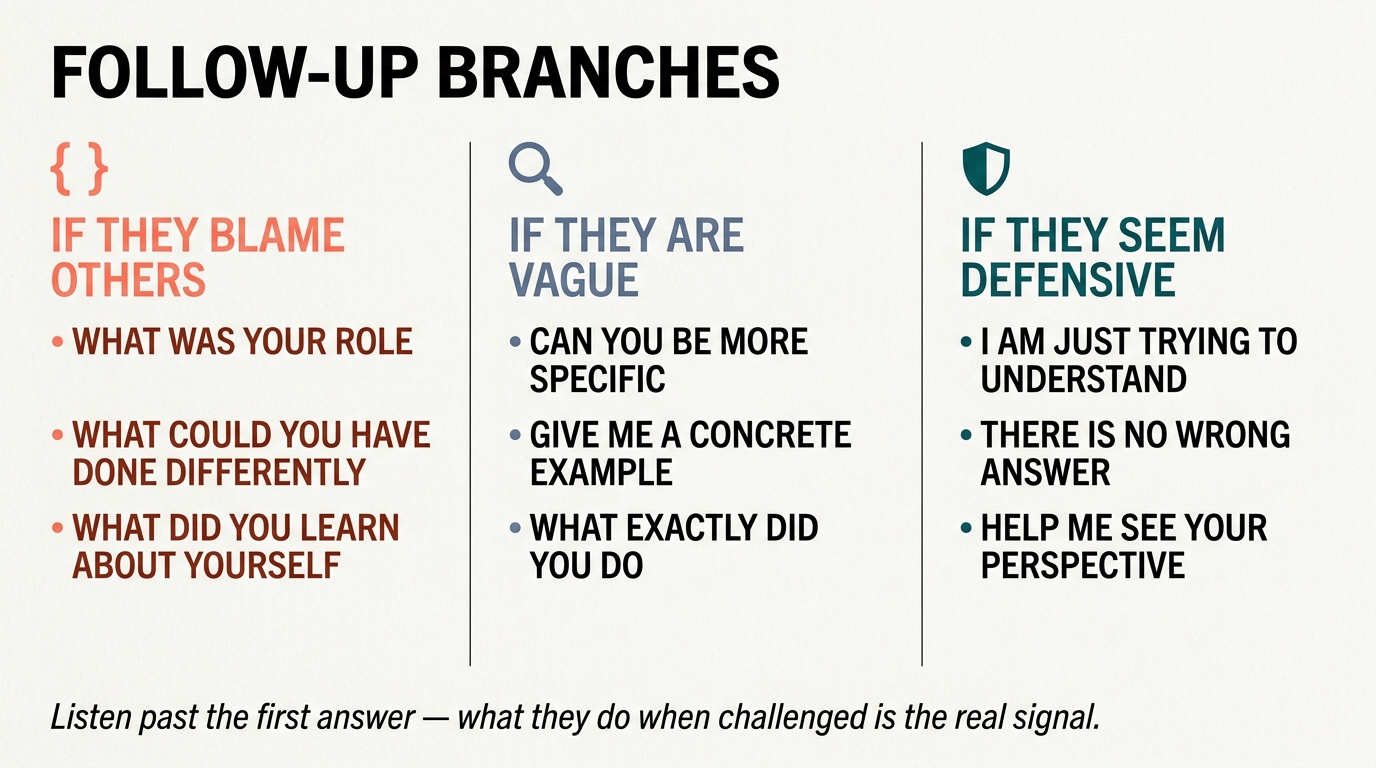
If they blame others:
- "What was your role in that situation?"
- "What could you have done differently?"
- "What did you learn about yourself?"
If they're vague:
- "Can you be more specific?"
- "Give me a concrete example."
- "What exactly did you do?"
If they seem defensive:
- "I'm just trying to understand."
- "There's no wrong answer."
- "Help me see your perspective."
Key Takeaways
That's the full toolkit — the rationale, the mechanics, the actual questions, and the follow-up strategies. The last section distills it into the seven habits that separate a useful behavioral interview from a polite conversation. Treat these as the principles to keep in mind even when you're improvising off-script, because the specific questions matter less than how you listen.
- Past behavior predicts future behavior - Ask about real situations
- Listen for patterns - One story vs. consistent themes
- Watch for red flags - Blaming, defensiveness, no self-awareness
- Ask follow-ups - Dig deeper into their answers
- Note what they don't say - Omissions are revealing
- Trust your instincts - If something feels off, explore it
- Compare across candidates - Use same questions for fairness
Behavioral questions help you understand who someone really is, not just who they present themselves to be. Use them to make informed decisions about fit.
Subscribe to our newsletter
Get the latest news and updates.
No spam. Unsubscribe anytime.


Bandmate® is the complete platform for musicians, bands, and venues to connect, collaborate, and grow. Find bandmates, discover venues, and build your music career with tools designed by musicians, for musicians.