How to Book More Gigs for Your Band in 2025
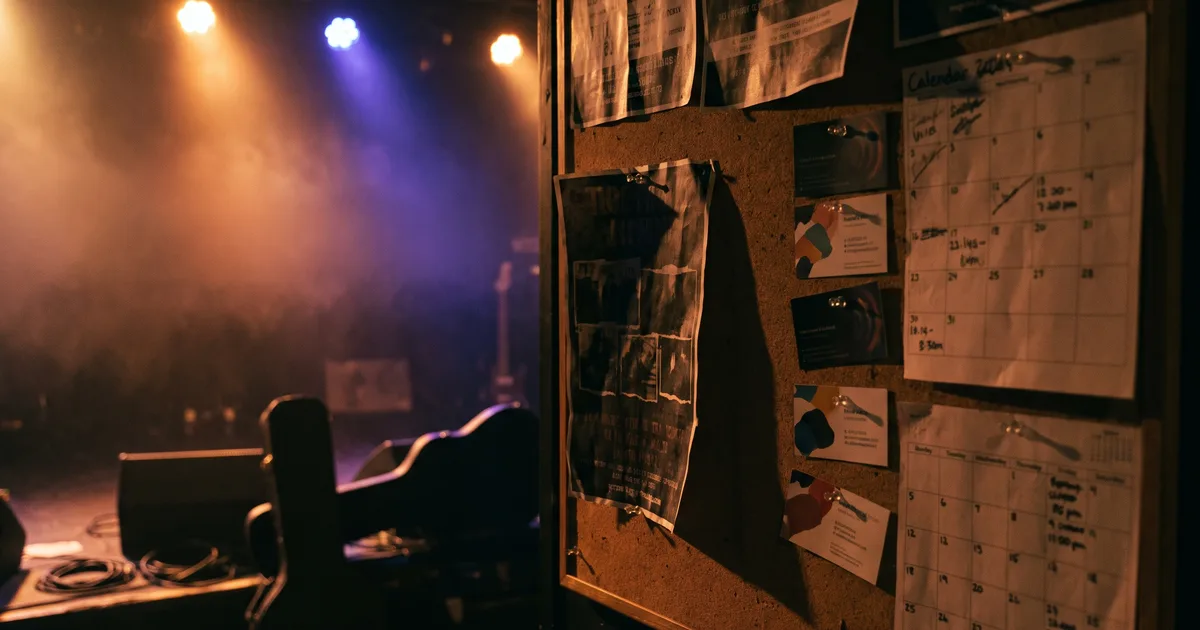
Most bands that "can't get gigs" are not unlucky—they are inconsistent. They send a handful of emails when inspired, wait two months, then decide the scene is closed. Busy local acts treat booking like a job: calendar blocks, a living venue list, and follow-up. This guide is that system.
Booking is a weekly job, not a quarterly panic
If booking only happens when the calendar looks empty, you are already late. Rooms fill weeks or months out. Buyers batch decisions. Your job is to keep a live pipeline so "next month" is never a blank page.
Pick one person as booking lead. That does not mean they decide everything alone—it means one inbox, one spreadsheet or tracker, and one voice on the phone when a date is on hold. Split ownership across four people and nothing ships.
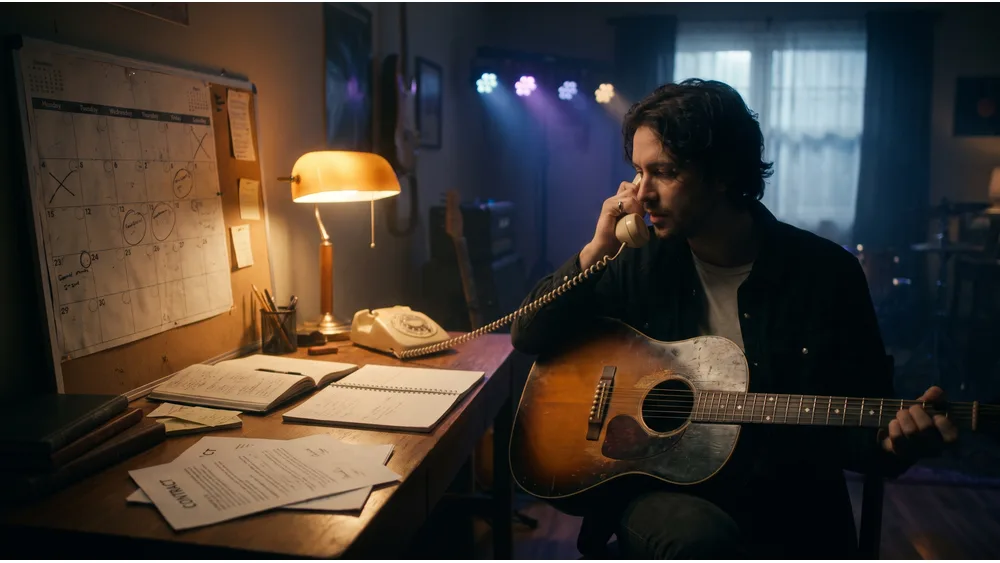
Block ninety minutes, twice a week, on the shared calendar. Session one: research and new outreach. Session two: follow-ups, holds, and confirmations. Treat those blocks like paid shifts. If someone is late to rehearsal, you notice. If someone skips booking hour, notice that too.
Define stages so status is not a vibe. A simple ladder works:
- Research — room fits your draw, genre, and geography
- Pitched — email or form sent with assets
- Replied — human conversation started
- Hold — date reserved pending details
- Confirmed — written agreement, deposit or guarantee if any, advance started
- Played / rebook seed — thank-you sent, next date proposed
If a row has been "pitched" for three weeks with no bump, it is dead inventory until you follow up or archive it.
Fix the kit before you scale the send list
Volume without proof is spam. Before you double your outreach, make sure a buyer can decide in under a minute.
You need a single link—your EPK / press kit—that includes:
- One-sentence positioning (who you sound like + what night you fit)
- Two or three best tracks, not your entire discography
- Live video that shows the room, not only a phone aimed at the kick drum
- Clean photos (one live, one promotional)
- Honest draw notes by market or room type
- Contact that actually gets answered
Broken private video links and "coming soon" pages kill more pitches than weak songwriting. Test every link on a phone. Ask a friend who is not in the band to open the kit cold and time how long until they hear something.
If your live video is still "we'll film next show," film a tight run-through in a rehearsal room with decent audio. Imperfect and public beats perfect and imaginary.
Write pitches people finish reading
Talent buyers skim. Your email is competing with bills, staff issues, and twenty other bands who also "bring energy."
Subject lines should be specific and low-drama:
- "Support availability — Band — June/July — City"
- "Co-bill fit for Venue night type — Band"
- "Returning act request — last played date"
Body structure that works:
- Who you are in one line (genre + comparable acts people actually know)
- Why this room (name a night, bill, or recent show you attended)
- Proof (one link to EPK; maybe one streaming or draw note)
- Ask (support slot, specific month windows, or co-bill)
- Logistics (city base, typical set length, any hard blackout dates)
Do not paste your life story. Do not attach a 40MB zip. Do not CC the whole band. One sender, one clear ask, one place to click.
Personalization is not flattery. It is evidence you know the room: "Saw the Thursday indie night is stacking local supports—we sit in that pocket and can pull 40–60 from our list for a first play." That sentence beats "we'd love to play your amazing venue" every time.
For deeper email tactics and follow-up cadence, use the venue outreach guide.
Build local density before regional heroics
Bands love the fantasy of a five-city weekend. Reality: empty Tuesday rooms three hours from home teach you less and cost more than a packed hometown support on a night people already go out.
Map every playable room within roughly ninety minutes. Tag capacity, genre fit, typical pay model (door deal, guarantee, bar tab myths), and whether they take cold email or only referrals. Your first ninety days of "more gigs" should mostly live on that map.
Rebooks compound. One solid show at a 150-cap room that wants you back is worth more than three one-off drives where nobody remembers your name. After every show, propose a next window while the memory is warm—not six months later when staff has turned over.
Climb capacity on purpose. If you have never filled 80 people, do not cold-pitch the 800-cap as a headliner. Ask for support, openers, or off-night packages that match your real draw. Ambition is fine; lying about numbers is how you get one chance and no second.
Festivals and agents can wait until you have local proof. See music festival booking and the booking agent guide when you earn the right to care.
Match the offer to your real tier
A lot of "we never get paid" frustration is actually "we only ask for headline guarantees at rooms that don't know us." Design offers for the tier you are actually in.
Early / local density
- Support slots and co-bills
- Reasonable door splits with clear door policy
- Merch freedom and a usable load-in window
- Focus on video, list growth, and relationship—not rent money from one night
Working local / regional
- Soft guarantees on proven rooms
- Better position on bills you have already drawn for
- Clear hospitality and settlement notes in writing
- Package dates (two cities, one weekend) only when both rooms make sense
Stretch plays
- Festival applications with a real story and live proof
- Higher rooms as support for national packages
- Agent conversations once you have demand you cannot service alone
Write down your pay floor for travel dates so you do not accept a "great opportunity" that loses money after gas, lodging, and missed work. A free local support can be smart. An unpaid six-hour drive rarely is.
Win the week after the show
The show is not the end of the booking process. The week after is where rebooks and referrals are won or lost.
Within 48 hours:
- Thank the buyer and the house (short, specific: what went well)
- Send a usable clip if you have one (vertical or horizontal, under a minute, good audio)
- Note settlement issues calmly if something was off—facts, not rants
- Ask about the next open window or preferred follow-up month
Within seven days:
- Update your tracker with draw, pay, hospitality, and "rebook signal" (yes / soft / no)
- Post content that tags the venue without being needy
- Pitch two or three new rooms while you still have fresh proof
- Capture emails or follows from the night into your list so next show is easier
Close the loop. Use a shared sheet or gig booking tracker so the band still knows the rooms when someone quits.
Measure what actually changes behavior
Vanity metrics feel good and change nothing. Watch numbers that force better decisions.
Response rate — replies divided by pitches sent. If it is near zero, your targeting, assets, or copy is wrong—not "the industry."
Hold-to-confirm rate — how often soft interest becomes a date. Low means you lose the advance (slow replies, unclear tech, flaky availability).
Rebook rate — rooms that want you again. This is the health of your live product.
Net pay per show — after travel, crew, and time. A busy calendar of money-losing dates is a hobby with better branding.
Lead time — average days between pitch and play. Helps you know when to start outreach for a release or tour window.
Review these monthly as a band, not only when someone is angry. Adjust volume, markets, or set length based on data. For set construction that helps you get asked back, see band setlist planning.
Know when representation helps (and when it wastes time)
Agents amplify momentum. They rarely create it from zero. If you cannot book a reasonable local calendar yourselves, an agent will not fix your draw, your kit, or your flakiness.
Signals you might be ready for help:
- Consistent local / regional demand
- Professional assets and reliable advances
- Enough inquiry volume that dates fall through the cracks
- Clear goals (markets, routing, guarantees) an agent can sell
Until then, your "agent" is the weekly booking block and a clean list. Tools like Bandmate help when coordination, assets, and contact chaos are the bottleneck—they do not replace rehearsal, taste, or showing up on time.
FAQ
How many venues should we contact per week?
Start with a number you can personalize and follow up—often eight to fifteen quality pitches, not a hundred copy-pastes. Consistency beats a one-time blast.
How long should we wait before following up?
About five to seven days for a short bump, then one more polite check if the date window still matters. After that, archive and revisit next cycle with new proof.
What if we have no live video yet?
Record a clean rehearsal multi-cam or single-cam with decent audio this week. Label it honestly. Empty "live" sections signal you are not ready.
Should we play for free to get more gigs?
Sometimes for strategic local supports with real upside (relationship, video, list). Almost never for long drives or rooms that always pay everyone else. Know your floor.
Does social media follower count matter to bookers?
Less than live proof and real draw. A smaller list that shows up beats inflated followers who never leave the house.
Related guides
Founder of Bandmate ®, entrepreneur, and musician helping bands succeed in the modern music industry.
Subscribe to our newsletter
Get the latest news and updates.
No spam. Unsubscribe anytime.