How to Build a Professional Band Website in 2025
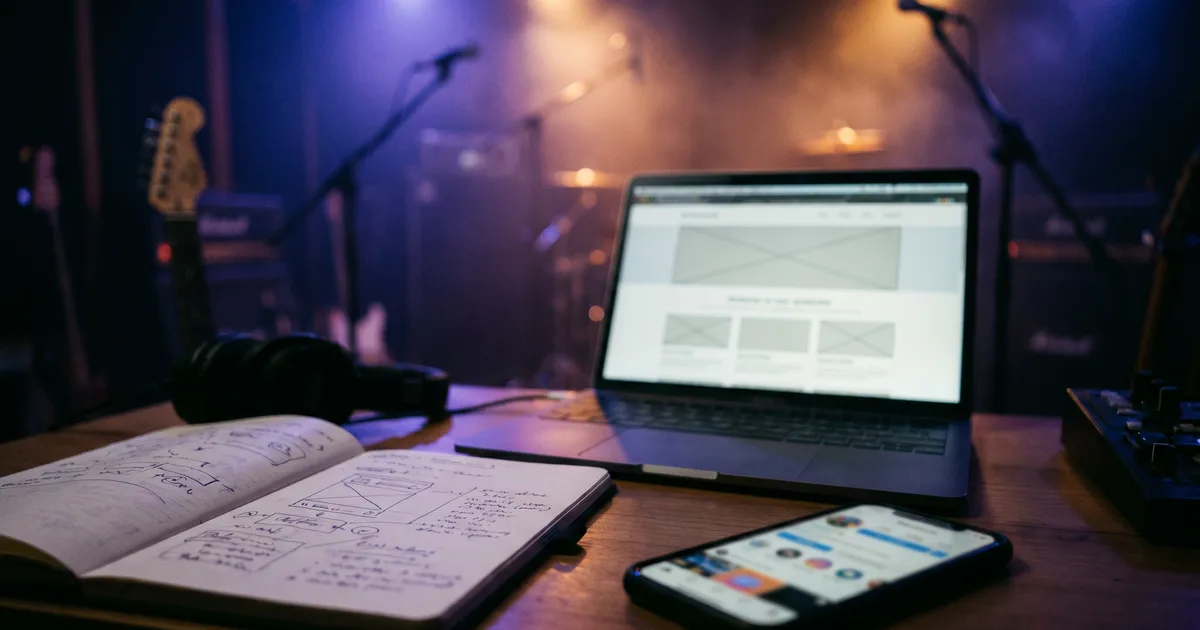
Social platforms change their rules, bury your posts, and can vanish overnight. Your band website is the one URL you control: music, dates, booking contact, and press assets live in one place bookers and fans can find without hunting six apps. Building it well is less about pixel-perfect design and more about clear structure, fast load, and a finish line you actually cross.
This guide walks through platform choice, the pages that matter, how to ship music and shows first, press assets, a launch checklist, and simple maintenance so the site does not rot after the first week of excitement.
Why your band needs a real site (not only Linktree)
A link-in-bio page is fine as a temporary hub. It is not a career homepage. Venues, festivals, supervisors, journalists, and new fans still open a proper site when they want context: who you are, what you sound like, when you play next, and how to reach a human.
A strong band site does four jobs:
- Prove you are real — photos, music, live clips, and a short story that sounds like adults run this project
- Convert interest — listen, buy tickets, join email/SMS, book the band
- Support outreach — a single URL in every pitch instead of a chain of half-broken links
- Outlast algorithms — your catalog and calendar remain findable when Instagram reorganizes again
If you only have a link tree today, treat the website as the next layer, not a vanity project. For a deeper page-by-page breakdown of what “good” looks like, pair this build guide with essential elements for a successful band website.
Step 1: Choose a build path you will finish
Most bands stall here by overthinking. Pick the path that matches your time and skill, then ship.
Music-friendly website builders (Squarespace, Bandzoogle, Wix, similar) win for most working acts. Templates already handle music players, shows calendars, and merch. You trade some flexibility for speed.
WordPress still works if someone on the team already lives in it and will own updates, security, and backups. Without that owner, WordPress becomes a second unpaid job.
Static or custom code is right when you have a developer in the band and want full control. It is the wrong first move for a group that has never launched a site.
Link-in-bio only is acceptable for a week while you build—not as a permanent strategy.
Decide in one meeting: platform, who owns the login, who owns content, and a public launch date. Shop options with a shortlist from band website builders so you are not comparing every tool on the internet.
Step 2: Lock domain and branding before you design
Buy a domain that matches how people already search and say your name. Prefer .com when available; a clean .band or country TLD is fine if the name is clear. Avoid clever spellings nobody will type.
Also set:
- Email on your domain (
booking@yourband.com) — looks professional in venue inboxes - Consistent spelling of the band name across domain, socials, and streaming profiles
- Redirects from common misspellings if you own them
Point DNS only when the site is ready for visitors. Until then, draft on the builder subdomain so you do not show half-built pages to bookers who already found you.
Step 3: Map pages before you touch fonts
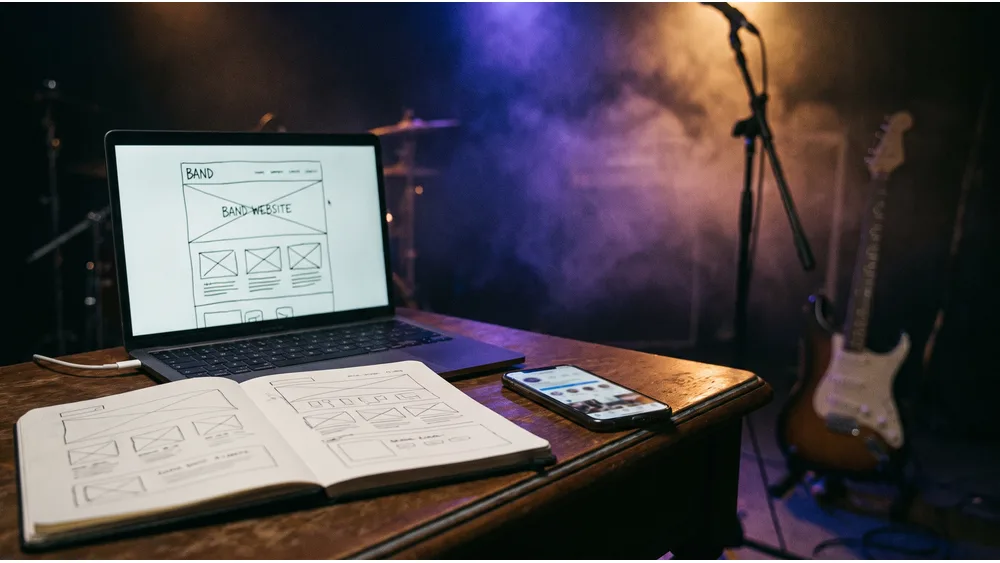
Wire the site as a content inventory, not a mood board. Minimum viable map for most bands:
| Page | Job |
|---|---|
| Home | Who you are + listen + next show + clear CTAs |
| Music | Stream/embed best work; optional buy/download |
| Shows | Upcoming dates with ticket links; past highlights sparingly |
| About / Bio | Short story + longer bio for press |
| Press / EPK | Photos, one-sheet, tech, contact (EPK guide) |
| Contact / Booking | One obvious path for buyers and fans |
| Merch (optional) | Store link or embedded shop |
Skip the twelve-page labyrinth. If a page does not help a fan listen, a booker book, or press write, cut it for launch.
Write real copy in a shared doc first: 100-word positioning, 300-word bio, show list, and contact rules. Design without copy produces empty pretty shells.
Step 4: Implement music and shows first
Homepage hero should not be a vague lifestyle photo with no audio. Lead with:
- One primary listen (best track or live clip)
- Next confirmed date (or “no public shows yet—join the list”)
- Primary CTA (listen / tickets / book us / join list)
Embeds should work on mobile. Test Spotify, Apple Music, Bandcamp, or your host of choice on a phone in airplane-mode-to-wifi transitions so you know players still behave.
Shows page rules:
- Only list confirmed public dates
- Include city, venue, time if known, and ticket URL
- Remove past dates monthly (or archive them intentionally)
- Never leave “TBA TBA TBA” for months—that signals a dead project
If you are still building calendar density, use the site to support how to book more gigs rather than pretending you are on a world tour.
Step 5: Add EPK and press assets as downloadable truth
Bookers and press hate chasing DMs for the same files. Put a Press or EPK page (or section) with:
- High-res photos with credit line
- Short + long bio
- Stage plot / input list if you tour rooms with real PAs
- One-sheet PDF (optional but useful)
- Links to best live video and studio tracks
- Booking email that a human answers
Keep masters in one shared drive and update the site from that source of truth. Broken Dropbox links are how good bands look amateur. Full structure lives in the band press kit article if you are assembling assets from scratch.
Step 6: Launch checklist (do not skip this)
Before you announce the URL:
- HTTPS works and HTTP redirects cleanly
- Favicon and browser tab title look intentional
- Open Graph / social preview images show correct band name and art when shared
- Forms send to a monitored inbox; test a dummy booking inquiry
- 404 page exists with a link home and to shows
- Analytics installed (even lightweight privacy-friendly analytics) so you know what pages matter
- Mobile pass: three real phones, not only your laptop
- Link audit: every button and embed clicked once
- Privacy / cookies basics if your region requires them for analytics/forms
- Backup / export of content so a platform meltdown is not career amnesia
Then soft-launch to friends and one trusted industry contact. Fix friction for 48 hours. Then post the URL in bios and pitches.
Step 7: Connect the funnel
A website that nobody reaches is a diary. Wire it into the rest of your presence:
- Social bios → homepage (or shows page during a run)
- Streaming artist profiles → website or mailing list
- Email signature on booking mail → EPK or shows
- Paid ads (if any) → specific landing section, not a random Instagram
- Printed posters and merch → short URL or QR to shows or list signup
Owned list (email or SMS you control) beats rented social reach. Even a simple signup that captures city + “I want show alerts” is enough to start. Use the site as the quiet center of marketing your band like a pro rather than another abandoned project.
Operational tip: store login credentials, DNS registrar, and content owners in the same place you track gigs and contacts. Chaos across personal emails is how domains expire on tour. Bandmate helps centralize the band-side ops while the site does the public job.
Step 8: Maintain monthly (or it dies)
Assign one person a 30-minute monthly checklist:
- Update shows and remove dead ticket links
- Swap hero listen when a stronger single or live clip exists
- Refresh press photos if the lineup or look changed
- Confirm forms still deliver
- Run plugin/theme/security updates if on WordPress
- Scan for outdated members, phone numbers, and “coming soon” ghosts
- Note any booker feedback (“couldn’t find tech rider”) and fix it
Quarterly, do a harder pass: new bio if the story evolved, better live video, merch seasonality, and a speed check. Sites fail slowly—nobody notices until a buyer screenshots your 2019 tour dates.
Common mistakes that waste the whole project
- Design theater — three months of fonts, zero music on the homepage
- Private video embeds — bookers hit a login wall and leave
- Six contact emails — nobody knows who answers; pick one booking path
- Autoplay chaos — multiple players fighting each other on mobile
- Copy-by-committee — five bios that contradict genre and city
- Launch without shows or list — visitor has nothing to do
- No owner — “someone should update it” means nobody will
Ship a simple site that works. Iterate after real traffic and real pitches teach you what is missing.
FAQ
How long should a first band website take?
A focused band can launch a clean builder site in one to two weekends if copy, photos, and music already exist. Waiting for perfect branding is the usual delay—not technology.
Do we need a blog?
Only if someone will write useful posts on a schedule. An empty 2022 blog hurts more than no blog. Put energy into shows, music, and press pages first.
Should we use our own domain on a builder?
Yes. Always use a custom domain. Builder subdomains look temporary and are harder to move later.
What if we only play covers or private events?
Your site still needs proof: sample video, set style, service area, and a clear booking form. Corporate and private buyers care about reliability and fit, not indie mythology.
Can a website replace an EPK?
A good site can host the EPK. Buyers still need scannable assets—music, live clip, photos, contact—whether that lives at /press or a dedicated kit URL.
Your website will not write the songs or load the van. It will make the work you already do easier to find, trust, and book. Choose a path, map the pages, put music and dates first, launch with a checklist, and keep one human responsible for the monthly pass. That is how a band site becomes infrastructure instead of another half-finished project.
Related guides
Founder of Bandmate ®, entrepreneur, and musician helping bands succeed in the modern music industry.
Band Tax Preparation Checklist: Everything You Need Before April
Band taxes don't have to be a nightmare. They become one because bands don't track the right things during the year, then scramble in March to reconstruct six months of receipts from memory and text threads. The fix is a 12-month tax preparation system, not a 12-day tax season panic. Here's the complete checklist for what to track, when to track it, and what to claim.
Building a Loyal Following of Engaged Music Fans
I've watched bands with mediocre music build massive devoted fanbases while technically superior bands play to empty rooms. The difference? Understanding that building a following isn't about viral moments or algorithm hacks—it's about genuine human connection repeated consistently until casual listeners become die-hard supporters.
Subscribe to our newsletter
Get the latest news and updates.
No spam. Unsubscribe anytime.