Best Tour Planning Tools for Bands 2026
Best Tour Planning Tools for Bands 2026
Touring is logistics under pressure. The bands that look lucky on the road usually have boring systems: routing that makes sense, budgets that survive bad nights, contacts that answer, and one person who owns the master calendar. Tools help only when those systems exist.
The stack most indie tours actually need
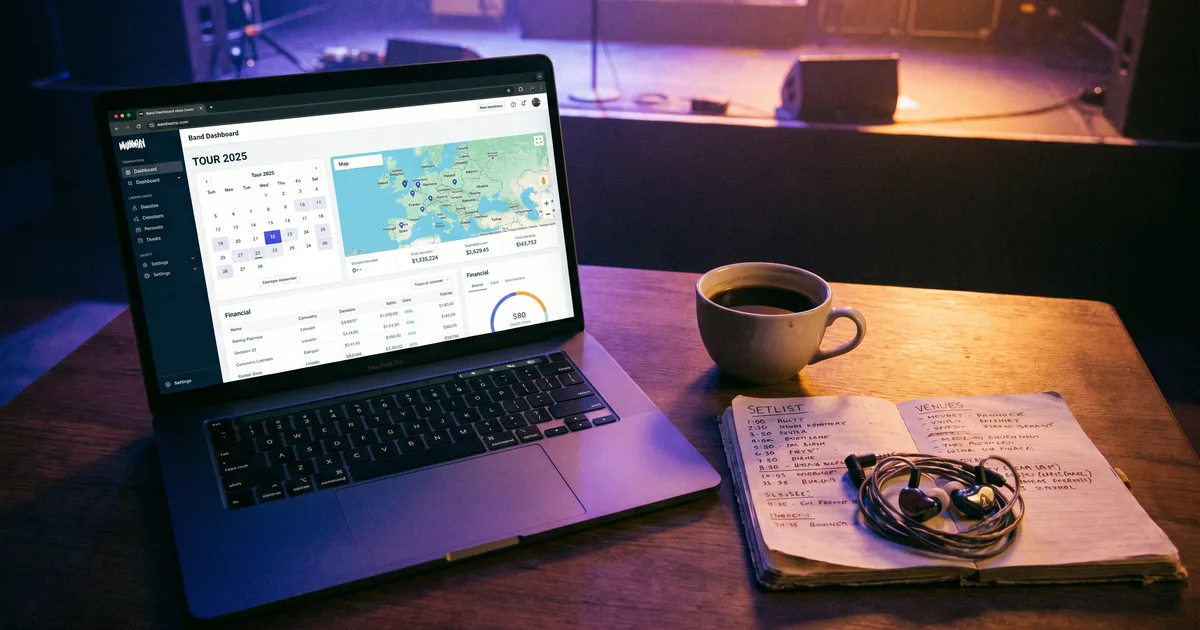
You need a way to see geography and drive times, a shared calendar for holds and confirms, a budget that updates as deposits land, a contact list for buyers and crash spots, and a folder for contracts and advances. Spreadsheets plus maps still run countless regional tours. Specialized touring software becomes worth it when multi-week routing, day sheets, and crew coordination outgrow shared docs. Start simple; add complexity when pain is real. The tour planning checklist remains the human backbone.
Connect booking truth to a gig booking tracker so the tour map is not a fantasy list of unpitched rooms. Price nights with a floor from how to price your band for gigs and fund the run through the band budget template. Merch weight and restocks belong in the plan—see merchandise suppliers.
How to plan a run without romanticizing it
Work backward from hard dates (festivals, album releases, members’ day-job constraints). Cluster geography to reduce dead miles. Build empty recovery days when drives are long. Confirm hospitality and tech needs in writing. Assign roles: driver rotations, merch, settlement, social capture. Two people should know how to access every confirmation and hotel. Offline copies of critical info still matter when reception dies.
Tools for routing, expense capture, and day sheets are useful when the whole team will actually open them. The best software is the one updated at load-out, not the one with the flashiest demo. If only one member understands the system, you have a single point of failure.
When plans break
Tours punish rigidity. Build buffer in the budget and the mileage. Know cancellation terms. Keep a short list of emergency rooms or markets where you have relationships. Insurance and vehicle realities from the band insurance guide are part of planning, not an afterthought.
Touring multiplies what you already are. Tight local ops in markets like Seattle, Nashville, Austin, Los Angeles, New York, and Chicago—visible via the directory and booking craft—make the road less improvisational. Choose tools that support clear systems, then do the unglamorous updates every day of the run.
Money on the road
Track daily spend against the tour budget every night, not at the end when receipts have composted in the van. Know the minimum you need per show after fuel and rooms. If the numbers fail early, cut a market or add a private event rather than hoping the finale saves you. Tools that capture expenses only help if someone enters them before sleep.
FAQ
What tour planning tools does a regional band actually need?
Routing map, shared calendar, budget sheet, contact list, and a place for contracts/advances. Fancy software is optional until multi-week routing breaks spreadsheets.
How far ahead should we route a DIY tour?
Six to twelve weeks for regional runs is common. Confirm holds before printing merch or buying non-refundable travel—tour planning checklist.
How do we keep tour finances from exploding?
Per-show floors, daily caps, and a shared tracker—band budget template and how to price your band.
Who owns the “tour brain”?
One person owns the master calendar; everyone else has read access. Dual ownership without a final decider creates double-books.
Related guides and tools
Subscribe to our newsletter
Get the latest news and updates.
No spam. Unsubscribe anytime.