Leadership Framework for Band Leaders
Leadership Framework for Band Leaders
Introduction
Leading a band is unlike leading in most other contexts. You're working with creative individuals who are passionate about their craft, often balancing band commitments with day jobs, families, and other responsibilities. This framework provides a practical approach to band leadership that respects the unique dynamics of musical collaboration while providing the structure needed for success.
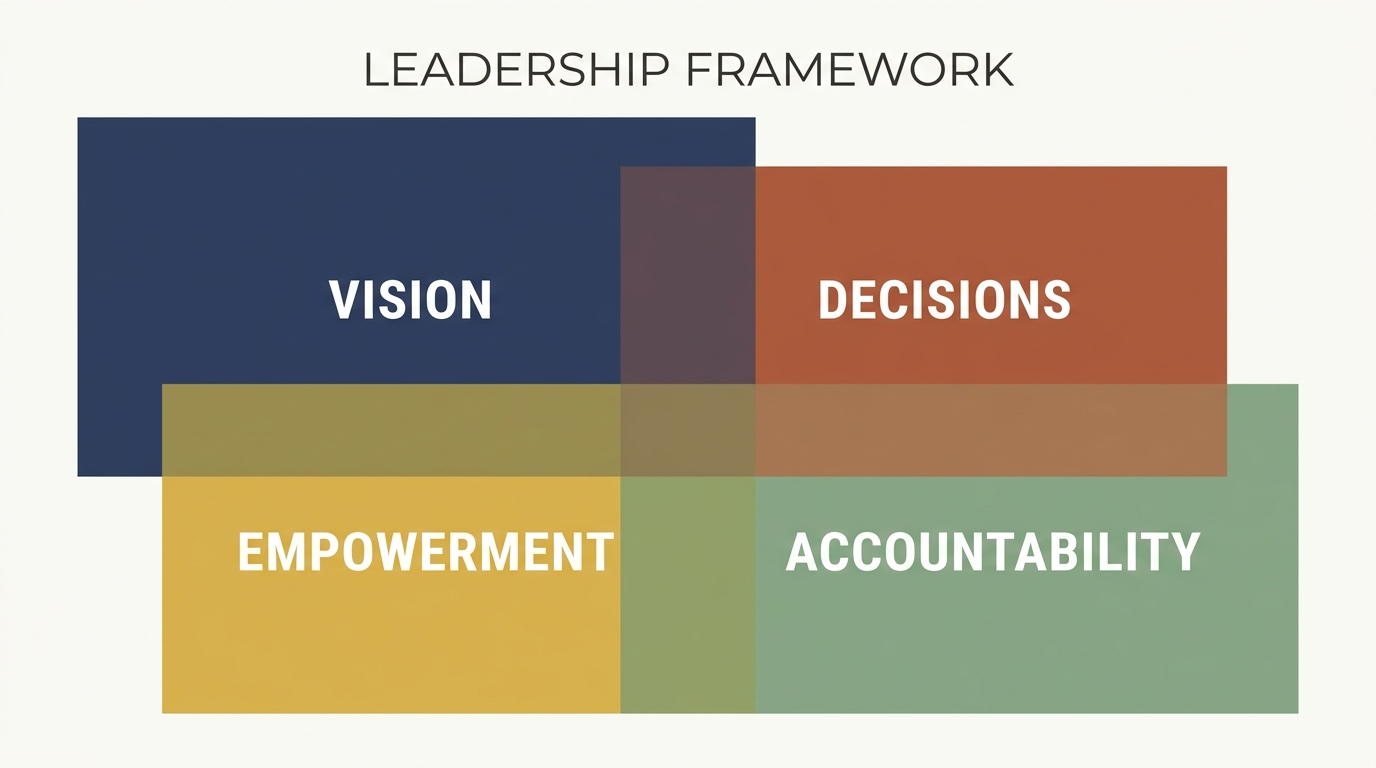
The Four Key Leadership Responsibilities
1. Define and Communicate Vision
What It Means
- Establish where the band is going
- Articulate why it matters
- Keep the vision alive and relevant
- Ensure everyone understands and buys into the direction
Practical Application
- Create a clear, written vision statement
- Reference the vision when making decisions
- Revisit and refine the vision annually
- Use the vision to evaluate opportunities
Common Pitfalls
- Vision that's too vague ("be successful")
- Never actually communicating the vision
- Vision that only reflects the leader's desires
- Letting the vision become stale or irrelevant
Action Steps
- Schedule a vision conversation with your band
- Document your shared vision in writing
- Post it where everyone can see it
- Reference it in every major decision
2. Make Decisions and Take Responsibility
What It Means
- Make timely decisions when needed
- Take ownership of outcomes
- Balance input with decisiveness
- Accept accountability for results
Practical Application
- Establish decision-making processes upfront
- Gather input before major decisions
- Make the call when consensus isn't possible
- Own the outcome, good or bad
Common Pitfalls
- Avoiding decisions to avoid conflict
- Making all decisions unilaterally
- Blaming others when things go wrong
- Changing decisions constantly
Action Steps
- Define which decisions need full band input
- Establish your decision-making process
- Practice making timely decisions
- Take responsibility publicly for outcomes
3. Support and Empower Members
What It Means
- Help each member succeed and grow
- Remove obstacles to their success
- Delegate meaningful responsibilities
- Develop their skills and confidence
Practical Application
- Regular one-on-one check-ins
- Identify and address obstacles
- Delegate based on strengths and growth areas
- Celebrate individual contributions
Common Pitfalls
- Micromanaging everything
- Never delegating important tasks
- Ignoring individual needs and goals
- Taking credit for others' work
Action Steps
- Schedule monthly check-ins with each member
- Ask "What obstacles can I remove for you?"
- Delegate one significant responsibility to each member
- Publicly recognize individual contributions
4. Address Issues Directly
What It Means
- Confront problems early and honestly
- Have difficult conversations when needed
- Address both performance and interpersonal issues
- Follow through on consequences
Practical Application
- Address issues within 48 hours
- Use direct, honest communication
- Focus on behavior, not character
- Follow up to ensure resolution
Common Pitfalls
- Letting issues fester
- Talking about people instead of to them
- Being too harsh or too soft
- Inconsistent enforcement of standards
Action Steps
- Commit to addressing issues within 48 hours
- Prepare for difficult conversations
- Focus on specific behaviors and impacts
- Follow up to confirm resolution
Servant Leadership Principles for Bands
What Is Servant Leadership?
Servant leadership flips traditional leadership on its head. Instead of band members serving the leader's vision, the leader serves the band members' success. This doesn't mean being a pushover—it means using your leadership position to help everyone succeed.
Core Principles
1. Listen First
- Seek to understand before being understood
- Create space for all voices
- Pay attention to what's not being said
- Validate concerns even when you disagree
2. Serve Others' Growth
- Help each member develop their skills
- Create opportunities for growth
- Provide honest, constructive feedback
- Celebrate progress and achievement
3. Build Community
- Foster genuine relationships
- Create psychological safety
- Encourage collaboration over competition
- Develop shared ownership
4. Lead by Example
- Model the behavior you expect
- Be the most prepared person in the room
- Show vulnerability and authenticity
- Admit mistakes and learn from them
Applying Servant Leadership
In Rehearsals
- Arrive early, stay late
- Be the most prepared
- Help others with their parts
- Create an environment where mistakes are learning opportunities
In Decision-Making
- Seek input genuinely
- Explain your reasoning
- Consider impact on each member
- Make decisions that serve the band's success
In Conflict
- Address issues to help people succeed
- Focus on resolution, not blame
- Protect the team dynamic
- Follow through on commitments
Balancing Authority and Collaboration
The Leadership Paradox
You need to be both decisive and collaborative. Too much authority and you become a dictator. Too much collaboration and nothing gets decided. The key is knowing when to use each approach.
When to Be Decisive
Use Authority When:
- Time is limited and a decision is needed
- You have expertise others lack
- The decision primarily affects you
- Consensus is impossible after good-faith effort
- The band has delegated the decision to you
Example Situations:
- Accepting or declining a gig offer
- Handling a crisis during a performance
- Making a call during rehearsal
- Enforcing agreed-upon standards
When to Be Collaborative
Seek Input When:
- The decision affects everyone significantly
- Others have relevant expertise
- Buy-in is crucial for success
- Time allows for discussion
- Multiple good options exist
Example Situations:
- Choosing which songs to learn
- Setting rehearsal schedules
- Deciding on band agreements
- Planning tours or major projects

The Decision-Making Spectrum
Level 1: Leader Decides
- Leader makes decision without input
- Informs band of decision
- Use rarely, only for urgent/minor decisions
Level 2: Leader Decides with Input
- Leader seeks input from band
- Leader makes final decision
- Explains reasoning to band
- Most common approach
Level 3: Consensus Decision
- Band discusses until agreement
- Everyone must support decision
- Use for major, band-defining decisions
- Requires time and commitment
Level 4: Delegated Decision
- Leader delegates decision to member(s)
- Leader supports the decision made
- Use to develop leadership in others

Making It Work
Be Clear About the Process
- Tell the band which level you're using
- Don't pretend to seek input if you've already decided
- Explain why you're using that approach
- Be consistent with similar decisions
Example Communication:
- "I need to decide this by tomorrow, so I'm making the call after hearing your thoughts."
- "This affects all of us equally, so let's discuss until we reach consensus."
- "I'm delegating this decision to Sarah since it's her area of expertise."
Common Leadership Pitfalls to Avoid
1. The Dictator
What It Looks Like:
- Makes all decisions unilaterally
- Doesn't seek or value input
- "My way or the highway" attitude
- Treats band members as employees
Why It Fails:
- Kills creativity and ownership
- Creates resentment
- Loses good members
- Limits the band's potential
How to Avoid:
- Regularly seek input
- Delegate meaningful decisions
- Value others' expertise
- Remember you're collaborators, not boss and employees
2. The People Pleaser
What It Looks Like:
- Avoids making decisions
- Can't say no to anyone
- Lets issues fester to avoid conflict
- Changes direction based on who spoke last
Why It Fails:
- Nothing gets decided
- Standards aren't maintained
- Respect is lost
- Band lacks direction
How to Avoid:
- Make timely decisions
- Address issues directly
- Stand firm on important matters
- Accept that you can't please everyone
3. The Absent Leader
What It Looks Like:
- Doesn't take responsibility
- Lets the band drift
- Avoids difficult conversations
- Delegates everything
Why It Fails:
- Band lacks direction
- Issues go unaddressed
- Members feel unsupported
- Chaos and confusion
How to Avoid:
- Stay engaged and present
- Take ownership of your role
- Address issues promptly
- Balance delegation with involvement
4. The Micromanager
What It Looks Like:
- Controls every detail
- Doesn't trust others
- Redoes others' work
- Can't delegate effectively
Why It Fails:
- Stifles creativity
- Prevents growth
- Creates dependency
- Burns out the leader
How to Avoid:
- Delegate and trust
- Focus on outcomes, not methods
- Let others learn from mistakes
- Develop others' capabilities
Real-World Application Examples
Example 1: Choosing New Material
Situation: Band needs to learn 5 new songs for upcoming gigs.
Poor Approach (Dictator): "Here are the 5 songs we're learning. I've already made charts."
Poor Approach (People Pleaser): "What does everyone want to learn?" (Leads to 3-hour discussion with no decision)
Good Approach (Balanced): "We need 5 songs that fit our style and work for these venues. Everyone suggest 2-3 songs by Friday. We'll discuss Saturday and decide together, but if we can't reach consensus, I'll make the final call based on what works best for the gigs."
Example 2: Addressing Chronic Lateness
Situation: Drummer is consistently 15-20 minutes late to rehearsal.
Poor Approach (People Pleaser): Say nothing, complain to other members, hope it gets better.
Poor Approach (Dictator): "You're late again. One more time and you're out."
Good Approach (Balanced): "Hey, can we talk? You've been 15-20 minutes late to the last four rehearsals. That cuts into our limited time and affects everyone. What's going on? How can we solve this?"
Example 3: Gig Opportunity Decision
Situation: Offered a gig in 3 days, need to decide quickly.
Poor Approach (Absent): "I don't know, what does everyone think?" (No decision gets made, opportunity lost)
Poor Approach (Dictator): "I accepted it. We're playing Friday." (Turns out half the band can't make it)
Good Approach (Balanced): "Got a gig offer for Friday. I need to respond by tonight. Can everyone make it? If yes, I'm inclined to accept—it's a good venue and decent pay. Any concerns I should know about before I confirm?"
Implementing This Framework
Getting Started
Week 1: Self-Assessment
- Review the four key responsibilities
- Identify your strengths and weaknesses
- Note which pitfalls you tend toward
- Commit to one specific improvement
Week 2: Communication
- Share this framework with your band
- Discuss how you want to lead
- Ask for feedback on your leadership
- Establish decision-making processes
Week 3: Practice
- Apply the framework to real situations
- Notice when you're using authority vs. collaboration
- Address one issue you've been avoiding
- Delegate one meaningful responsibility
Week 4: Reflection
- Review what worked and what didn't
- Gather feedback from band members
- Adjust your approach
- Commit to continued growth
Ongoing Development
Monthly:
- Check in with each band member individually
- Review recent decisions and outcomes
- Address any emerging issues
- Celebrate successes
Quarterly:
- Gather formal feedback on your leadership
- Review and refine the band's vision
- Assess progress toward goals
- Plan leadership development activities
Annually:
- Comprehensive leadership self-assessment
- Band-wide feedback session
- Vision and values review
- Set leadership goals for the coming year
Conclusion
Effective band leadership is about serving your band's success while providing the direction and decision-making needed to move forward. It requires balancing authority with collaboration, addressing issues directly while supporting growth, and maintaining vision while staying flexible.
Remember:
- Define and communicate vision
- Make decisions and take responsibility
- Support and empower members
- Address issues directly
Lead with humility, decide with confidence, and always keep the band's success at the center of your leadership.
Additional Resources
- Leadership Assessment Tool
- Vision Statement Template
- Decision-Making Framework
- Check-In Template
- Difficult Conversations Guide
This resource is part of "The Bandleader: Defining Your Vision and Leading with Purpose" from the Field Guides for Modern Bands series by Tim Mushen.
Subscribe to our newsletter
Get the latest news and updates.
No spam. Unsubscribe anytime.


Bandmate® is the complete platform for musicians, bands, and venues to connect, collaborate, and grow. Find bandmates, discover venues, and build your music career with tools designed by musicians, for musicians.