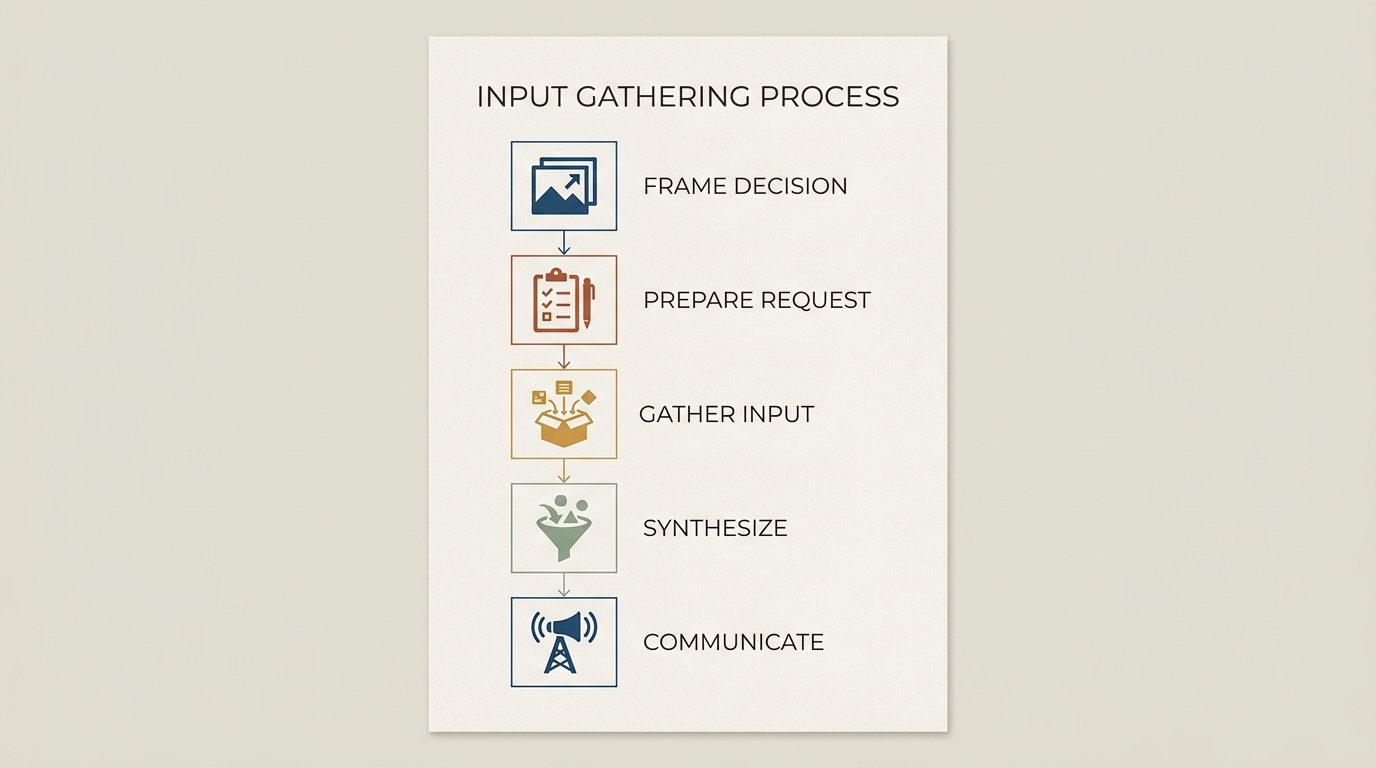
Input Gathering Template
DOCX download
Input Gathering Template
Free editable Word guide you can copy, fill in, and share with your band. Also readable on this page.
How to use this guide
Template for gathering input before decisions. Run the template on one live decision and come away with a deadline, a decider, and a list of who must be heard.
How to run it: pull this template out each time a costly decision appears, fill the decision, voices, deadline, and decider blanks in the chat, then archive the finished page beside past decisions.
“Nobody told me” is a process failure. Gather input before decisions that cost everyone’s time or money.
Consensus is rare
Identity-level choices — the band name, a major rebrand, who is actually in the lineup — deserve broad buy-in because members live inside them for years. Almost everything else, from poster colors to which Tuesday to rehearse, needs opinions heard once and then a single person who decides.
Treating every call like a constitutional convention is how bands freeze. A four-piece that spends three weeks polling the group chat about a sixty-dollar microphone will miss the festival application deadline that actually mattered, and everyone will have an opinion about that too.
Async first
Send a short written prompt with a clear deadline — “reply with your venue pick by Thursday 9 pm” — and collect the answers before anyone meets. Written rounds keep quieter members visible in the record, while open-ended chat threads reward whoever can stay up latest arguing, not whoever is right.
Meet only about what still divides the room after the written round closes. Twenty minutes on the two genuinely contested points beats two hours re-reading positions everyone already stated, and the written record survives for the decision page months later, when memories have faded.
Close the loop
After the decider calls it, report back what you heard and what you chose, including the views that lost. “We went with the brewery gig because three of you flagged the PA cost at the other spot” takes thirty seconds and proves the exercise was real.
Asking for opinions and then going silent trains members to stop offering them, which is how “nobody told me” becomes the band's recurring refrain. Even a one-line follow-up in the chat keeps the pipeline alive for the next decision that needs honest answers fast.
Fill-in: Input plan
Decision: ________
Who must be heard: ________
Deadline: ________
Decider: ________
Putting it into practice
For the next shared decision, set an input deadline before debate.
FAQ
When is full consensus required?
Rarely—identity-level choices (name, major brand pivots, who is in the band). Most ops need input then a decider.
How do we gather input without endless meetings?
Async prompts with a deadline, then a short decision meeting. Open-ended chat threads never end.
What if quiet members never speak?
Ask them directly or use written rounds. Silence is not always agreement; sometimes it is conflict avoidance.
How much input is enough?
Enough that key stakeholders were heard once. Perfectionist polling is delay.